#News & Events ·2025-05-19


Great Country Craftsman: Liu Weibing
Founder of Sichuan David Architectural Design | Professor-level Senior ArchitectThe Foremost Guardian of Sichuan Linpan: Aligning Shu-style Architecture with the World
He has brought the nearly forgotten "Sichuan Linpan" back into the spotlight, and even to global attention.
Sichuan Linpan is a rural settlement form of the Chengdu Plain, structured around the core elements of forests, water, residences and farmland. It embodies the simple, nature-oriented philosophy of Taoism native to the Shu region. The bamboo forest and sun-drying yard of his maternal grandmother, the banana courtyard of his paternal grandmother, and the small fish darting through the rice paddies in his childhood—this organic living environment laid the foundation for his architectural and artistic creation. Nature in the countryside and woodlands is his spiritual home, and he aspires to preserve this fading nostalgia in the present day.
In the face of the overwhelming wave of modern urban architectural homogenization, Liu Weibing has persisted in his 35-year rural practice of Protection and Renewal of Sichuan Linpan Settlements. He has become increasingly convinced that vernacular architecture speaks a language closer to our inner selves. We must cherish the agricultural culture passed down by our ancestors, and reclaim our profound spiritual home through traditional Chinese construction methods and unique cultural identities, so as to regain our confidence and self-esteem. In this sense, culture must take the lead in rural revitalization.
From Huaxi Village, Nanxi Village and the Horse Chair Workshop to Xingfuling, he has unveiled a series of meticulously designed Linpan renewal projects, revealing to the world the rebirth of traditional habitat wisdom. His accolades include the Outstanding Contribution Award for China’s National Architectural Undertakings, the Kingfar Human Settlement Award from the Ministry of Science and Technology of China, the title of Pioneer of China’s Rural Revitalization from the China Soong Ching Ling Foundation, the UN Asian Urban Landscape Award, the Global Human Settlements Environment Planning and Design Award, the American Institute of Architects (AIA) Honor Award, and the World Design Organization Gold Award for Sustainable Architecture. He has garnered widespread attention from the international ecological architecture community, and has been invited to deliver speeches at the UN Headquarters in New York, the World Urban Forum, the Berlin High-level Dialogue on Cities, among others. He is acclaimed as the foremost guardian of Sichuan Linpan.
On March 31, 2025, at the ZGC Forum · World Green Design Forum, witnessed by more than 1,000 guests from governmental bodies, international organizations, research institutes and leading enterprises across over 50 countries, Liu Weibing received the certificate of the 2024 International Contribution Award for Green Design from the WGDO Jury Committee, becoming one of only four global winners. This prestigious honor is an authoritative recognition of his three decades of commitment to the philosophy of "traditional settlement protection + green and low-carbon design".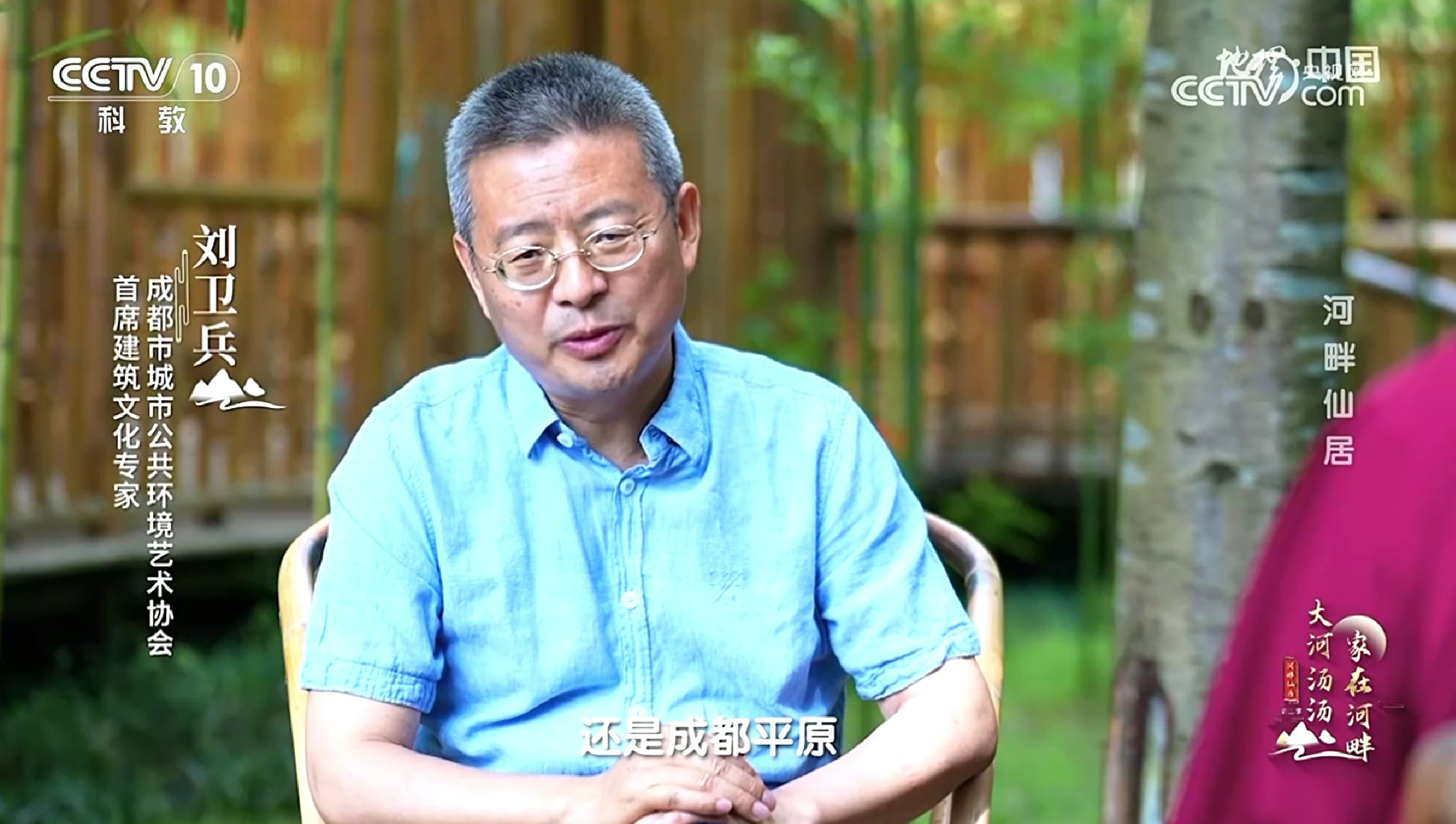
▲CCTV-10 Geography·China Features Mr. Liu Weibing
On April 27, CCTV-10 Science and Education Channel’s large-scale documentary series Home by the Great River: Immortal Dwellings by the River, part of Geography·China, dedicated a special report to Architect Liu Weibing. Taking Linpan as his canvas and culture as his ink, he has composed a grand scroll of ecological civilization for the times, and pioneered a paradigm that integrates traditional ecological construction systems with modern low-carbon technologies. His explorations have not only shaped an ecological fabric with distinctive oriental charm for Chengdu’s Park City, but also contributed the "Sichuan Wisdom" to China’s sustainable urban-rural development through the "Linpan+" model.
Shao Dazhen, a renowned art critic and professor at the Central Academy of Fine Arts, once commented: "In architectural creation and artistic expression, Liu Weibing has achieved artistic self-consciousness through his international vision and contemporary artistic language, breaking through the boundaries between the East and the West. Nurtured by the long-standing Bashu culture, his works possess a rare uniqueness, creating an extraordinary charm that lingers in the mind long after viewing."
Ingenious Creation of Contemporary New Linpan: Organic Integration of Traditional Crafts and Modern Technology
The finest innovation is often a loving retrospect to tradition.
Liu Weibing believes the most inspiring revelation from Sichuan Linpan is its redefinition of the essence of architecture: architecture is not a monument to conquer nature, but a metabolic organ of the ecosystem. He adopts advanced bioclimatic architectural design strategies, infusing scientific and technological power into this ancient agricultural civilization.
The concentric structure of "forest-residence-water-farmland" in Sichuan Linpan was once the most elegant living formula of agricultural civilization. In his renovation practices in Dujiangyan, Liu Weibing employs the IESVE integrated ecological architecture software to analyze traditional column-and-tie wooden courtyards, creating a more comfortable living environment. The compressive strength of bamboo-reinforced concrete is comparable to that of steel, while 3D-printed bamboo fiber connectors endow buildings with the flexibility of bamboo. Moreover, the bamboo-frame clay walls "breathe" autonomously with the temperature differences between day and night.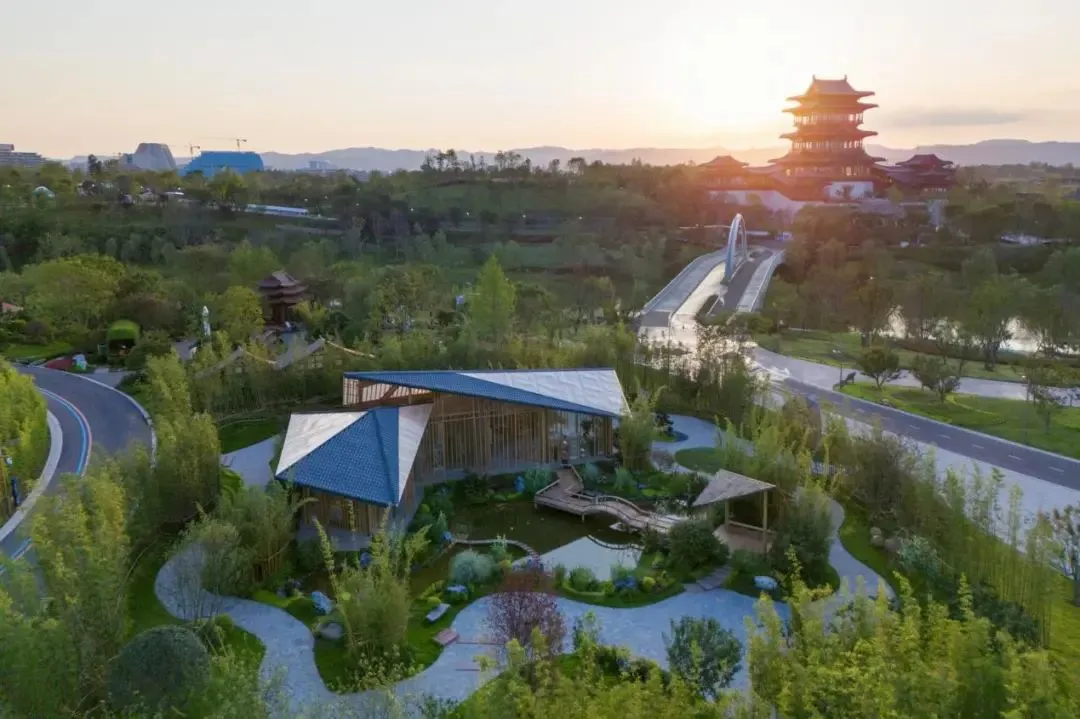
Behind these innovations lies Liu Weibing’s team’s subversive understanding of architectural design: a true architectural revolution is not about demolition and reconstruction, but about the organic integration of traditional crafts and modern technology.
At the Sichuan Linpan restoration sites, Liu Weibing’s team uses digital twin technology to establish an "ecological archive" for each courtyard—137 parameters, from bamboo cluster density to groundwater level, form the DNA library of the building. Data shows that courtyards enclosed by bamboo clusters have a summer indoor temperature 3.8°C lower and humidity 22% higher than open areas.
Accordingly, Liu Weibing integrates bamboo fiber ventilation ducts into exterior walls in his designs, realizing passive ventilation through air pressure differences. This "breathing facade" renders air conditioning redundant. Notably, the modern transformation of the eave corridor is remarkable: the widened space serves not only as a drying area but also as a community theater, a starry teahouse and an open-air classroom.
Material innovation is a practice of "learning from nature". Liu Weibing’s team discovered that bamboo has the potential to replace cement, realizing "substituting bamboo for stone". This "sustainable biomass bamboo aggregate concrete" can reduce carbon emissions. If widely applied in rural areas, it could address the carbon emission challenges facing the construction industry. The secret of bamboo-reinforced concrete lies in "perfection in imperfection"—the natural curvature of bamboo fibers forms an earthquake-resistant buffer layer.
While the international architectural community debates green building material standards, bamboo-reinforced concrete has quietly supported the renovation of low-rise vernacular courtyards in Sichuan Linpan, proving that the most sustainable materials grow right beneath our feet.
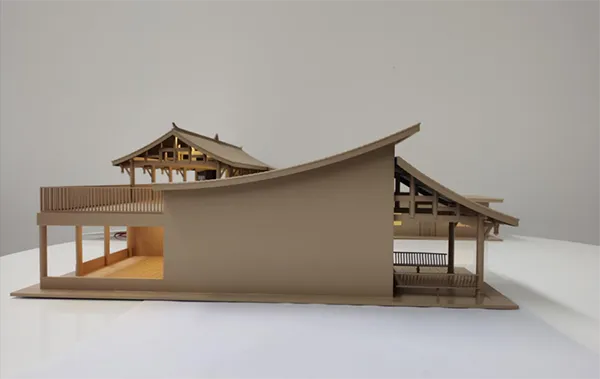
▲Design Model of Nanxi Yao Winner of the Kingfar Science and Technology Award from the Ministry of Science and Technology of China
In Liu Weibing’s view, the most avant-garde rural revitalization solutions are hidden beneath the bamboo fences of our ancestors. In the design of the Nanxi Yao project in Dujiangyan, he transformed the traditional "yard dam" into a retractable community stage—an agricultural square by day, and an open-air cinema at night when bamboo screens are retracted. This design philosophy of "blurred boundaries" allows functions to follow living needs.
In Linpan, aesthetics is a flowing ecological narrative. At dawn, mist passes through ventilation ducts in bamboo walls, weaving a hazy light curtain indoors; at noon, photovoltaic tiles convert sunlight into electricity, and the shade cast by eaves just shelters tea sets; at night, ground-source heat pumps extract geothermal energy from old cellars, keeping century-old residences warm in winter and cool in summer. The wisdom of this aesthetics lies in "hiding technology in scenery"—all modern technologies are integrated into the environmental fabric, just like bamboo forests growing naturally.
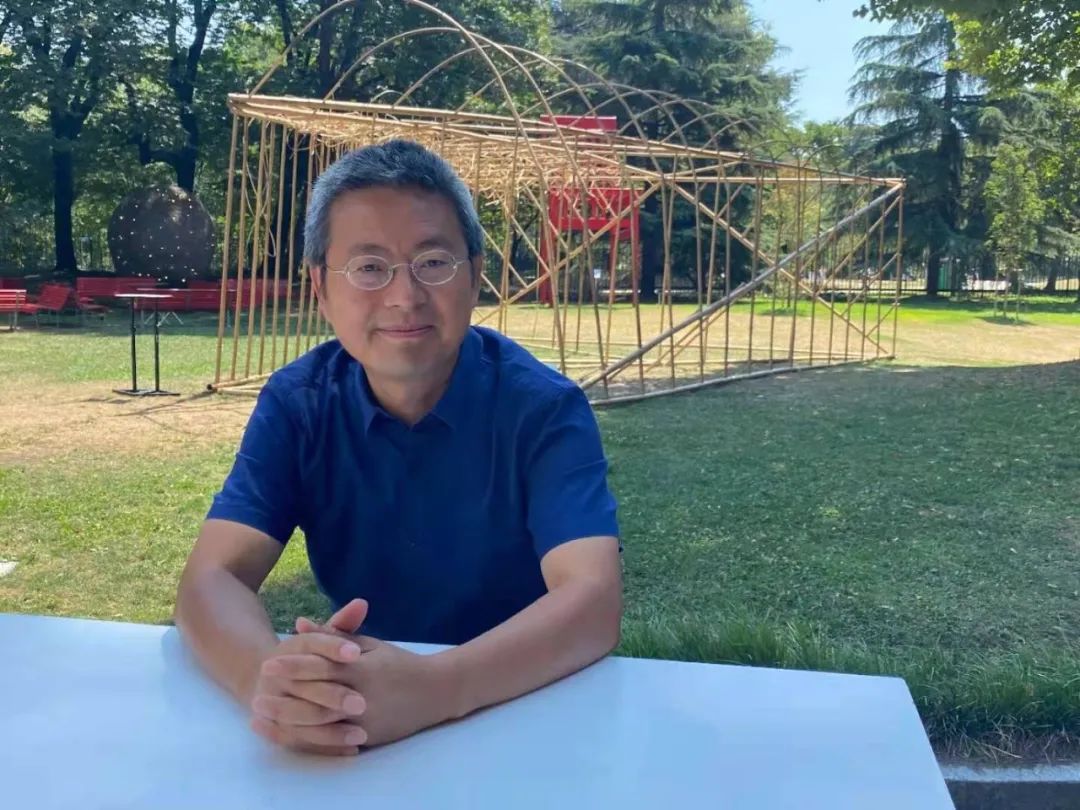
At the 23rd Milan International Triennale in Italy, he even conveyed to the world through the artistic bamboo installation Invisibility that Sichuan Linpan is more like a "secluded pastoral poem", reinterpreting the contemporaneity of poetic dwelling with a humble attitude.
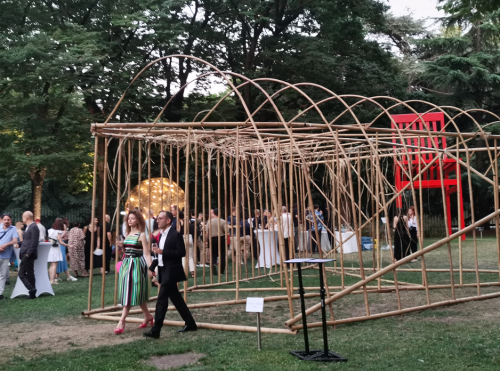
▲Invisibility
The renewed workshop is endowed with a new spatial aesthetic experience, fully embodying the Shu attitude toward life of "harmony between man and nature" inherent in Sichuan Linpan.
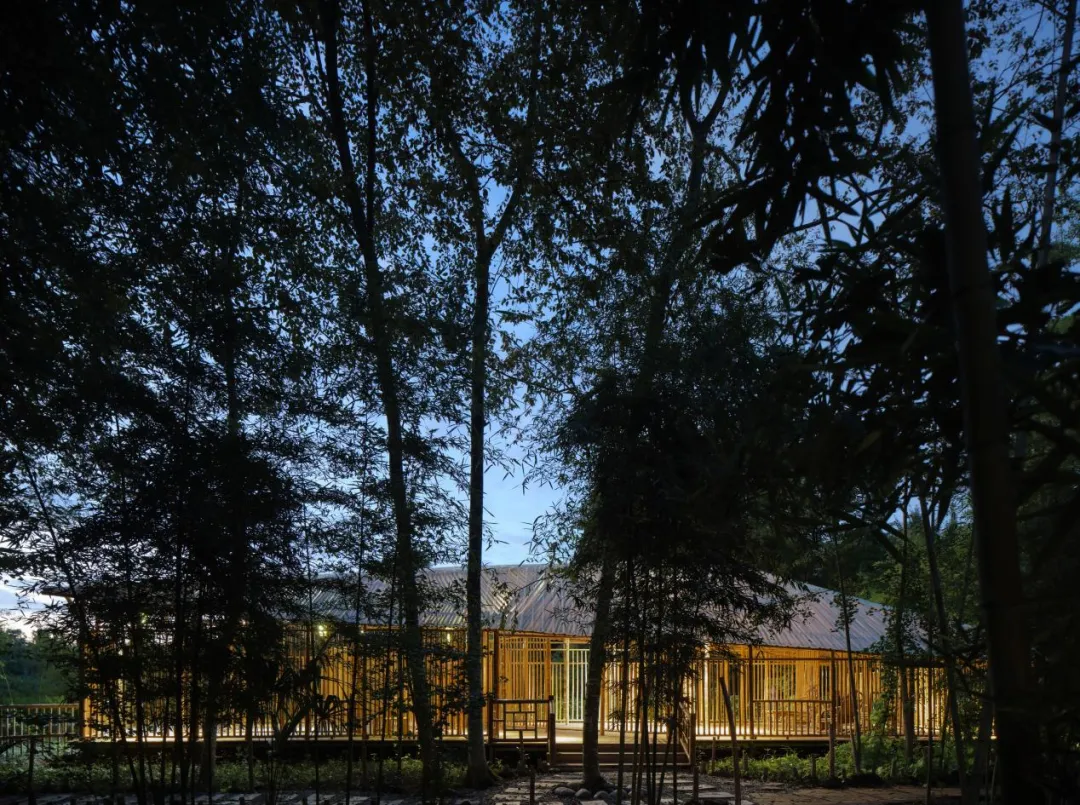
▲Qingchengshan Ma's Chair Workshop (Intangible Cultural Heritage) Winner of the Global Human Settlements Environment Planning and Design Award
The lush Linpan settlements, large and small, scattered across the Chengdu Plain are the emotional anchor of Sichuan people and an ecological treasure. Liu Weibing is committed to blazing a path for the continuous renewal of Sichuan Linpan settlements, one that features distinctive traditional regional cultural traits, modern civilizational elements, and sustainable industrial support.
TISE Innovative Systems Thinking: Cross-boundary Integration from Theory to Practice
True cultural confidence never requires a choice between archaizing and westernization.
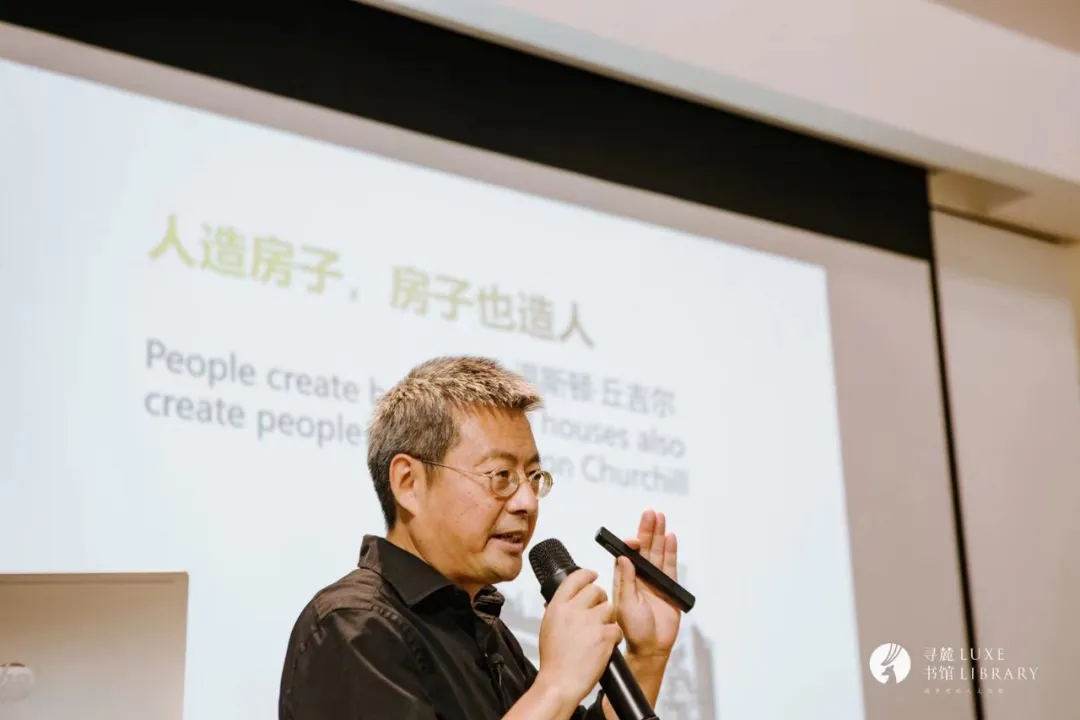
In his speech at UN-Habitat, Liu Weibing pointed out: "A low-carbon city is not a pile of technologies, but a reconstruction of the relationship between humanity and nature", sparking renewed international academic attention to "Oriental ecological philosophy". While learning advanced contemporary low-carbon habitat science and technology, he also consults local chronicles of project areas to understand regional humanities, history and natural landscapes. Liu Weibing emphasizes that this is the genetic code that has enabled the Chinese civilization to endure and thrive.
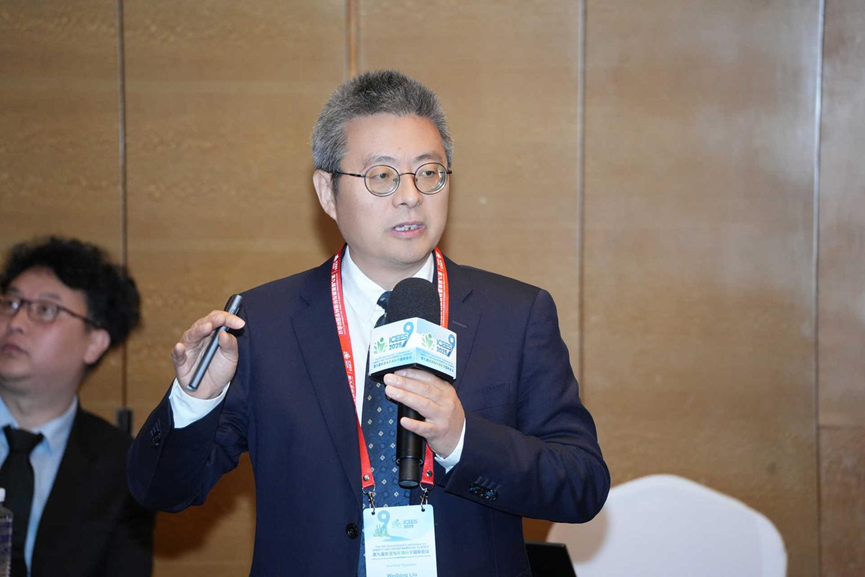
On March 28, at the 9th International Conference on Energy and Environmental Sciences (ICEES 2025), Liu Weibing’s paper was included in the conference proceedings. In his invited keynote speech, he innovatively proposed that TISE Systems Thinking should serve as the core methodology for urban-rural planning and architectural design. He advocates building resilient and low-carbon urban-rural spaces through systematic collaboration across four dimensions: Technological, Institutional, Social and Environmental, and evaluating the outcomes from three aspects: People, Economy and Nature.
His paper, one of the few selected achievements in architectural design, marks that the theoretical construction of Chinese scholars has entered the mainstream international academic horizon. Meanwhile, Liu Weibing deeply integrates TISE Systems Thinking with habitat practices: "Digitalization and intelligence are not merely technical tools, but the key to restructuring architectural carbon emission management."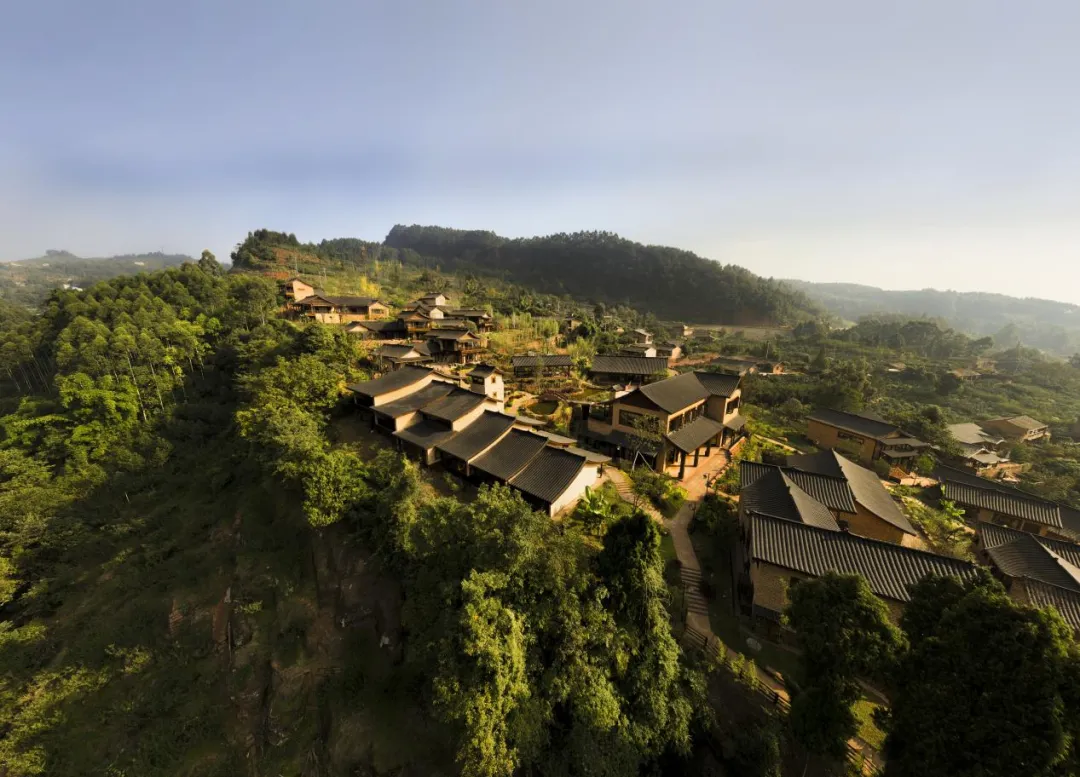
▲Danling Xingfuling, Meishan, Sichuan Winner of the UN Asian Urban Landscape Award
Guarding Sichuan Linpan, reviving the charm of Shu culture, and filling cities with poetic nature—this is the beautiful picture of Chinese habitat that Liu Weibing, a great country craftsman, aspires to present to the world.
2025-05-19
2025-06-09
2022-10-13


抖音二维码


微信公众号

QQ群:

小红书二维码
(028)65292560
Floor 6, Building 3, ShuDu Center, No. 138, Tianfu 2nd Street, High-tech Zone, Chengdu City, Sichuan Province
Links