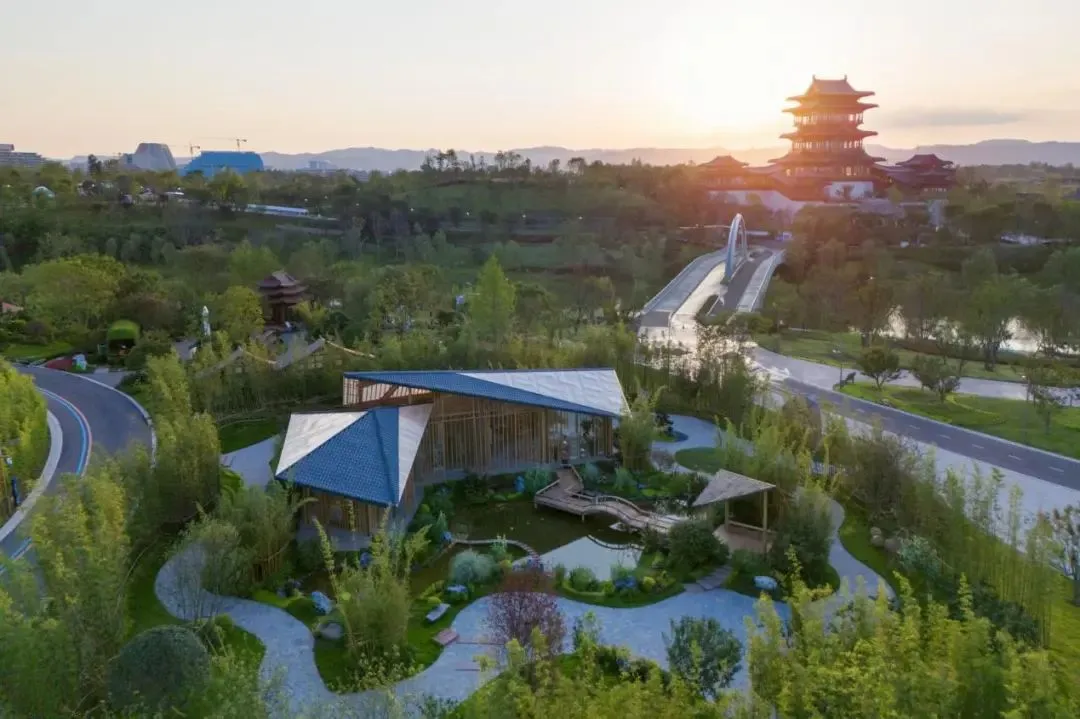
Meishan Garden of the 2024 Chengdu International Horticultural Exposition, designed by the team from Sichuan David Architectural Design Co., Ltd. led by Professor-level Senior Architect Liu Weibing, has been hailed by China News Service as the "Urban Living Room" with the most oriental poetic charm. It has been conferred the
2024 Gold Award for Sustainable Innovative Design of International Human Settlements, jointly presented by the World Design Organization (WDO) and the German Green Award (GPA).
Under the theme of
A Natural, Ecological and Cultural Museum That Can Be Read — An Ecological Scroll from Su Dongpo's Perspective, Meishan Garden inherits the millennium-old historical context. Through poetic spatial narration, it presents to the world the Linpan settlements of Western Sichuan, the carrier of nostalgia culture in Su Shi's hometown, as well as the distinctive ecological human settlements and intangible cultural heritage that have endured in the Shu region for thousands of years.
NO.1 Poetic Expression Inspired by Poetry
Drawing on the millennial ecological courtyard philosophy of "harmony between man and nature" embodied in the Linpan settlements of Western Sichuan, and integrating Su Dongpo's poetic depictions of the Shu region, Meishan Garden features seven scenic spots: Dongpo Forest, Ruilian Pond, Bamboo-less Pavilion, Ode to Orange Garden, East Garden, West Garden and Plum Garden. Within this enclosed landscape, it unfolds the unique poetic charm and humanistic sentiments of Meishan, while showcasing the contemporary glamour of this time-honored scenic destination.
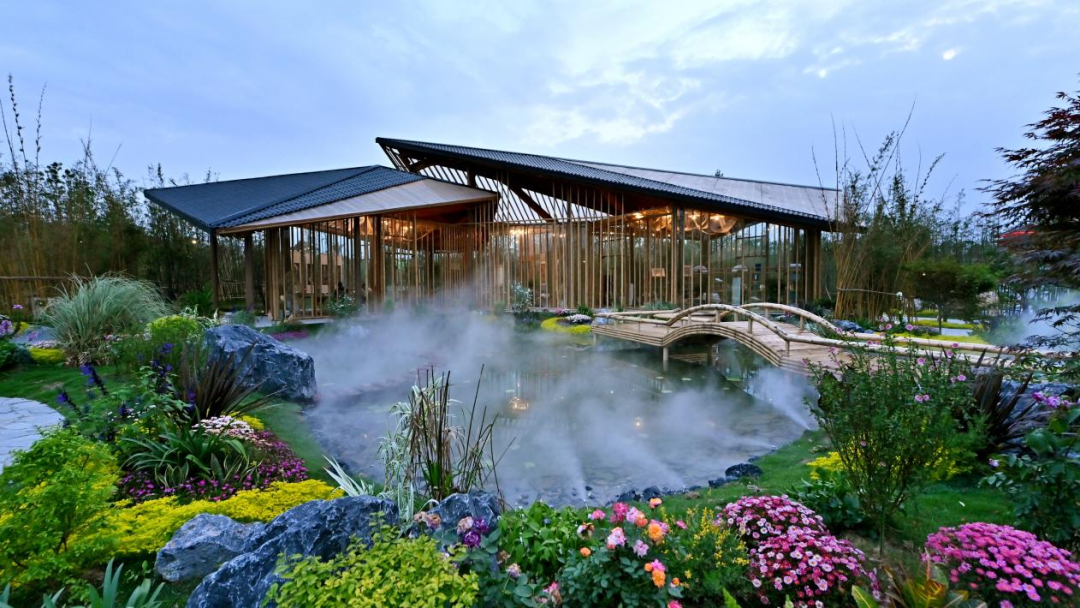
Dongpo Forest is formed by thousands of lush green bamboo stalks, quietly echoing the open-minded spirit embodied in Su Dongpo’s poem Calming the Waves: Listen Not to the Sound of Leaves Piercing Through the Forest.
The Bamboo-less Pavilion derives its name from Su Dongpo’s poem To Monk Yuqian at the Green Bamboo Lodge. Despite its name, bamboo shadows sway gracefully everywhere, offering a perfect interpretation of Su Dongpo’s noble sentiment: “I would rather go without meat than live without bamboo.”
Standing in the Plum Garden, one seems to hear Su Dongpo’s soft, lingering verses echoing across time and space. In the West Garden, moonlight flows like water, and the shadows of bamboo and cypresses intertwine, faithfully recreating the ethereal artistic conception of Su Dongpo’s
Night Tour of Chengtian Temple.
NO.2 Empowered by Technology
The main entrance is situated on the north side of the site, to the east of the Jiangxi River, directly facing the main visitor circulation route. Two secondary entrances are planned in the east and south directions in accordance with the park’s road network.
Dongpo Workshop is logically positioned at the center of the site, enclosing a courtyard space and visitor walkways. The terrain is generally gentle, sloping gradually from the southeast to the northwest.
During the layout design, the orientation and scale of the main building were continuously adjusted based on analyses of the site’s solar path and prevailing wind directions, ultimately forming a mutually reflective and complementary relationship with the main entrance.
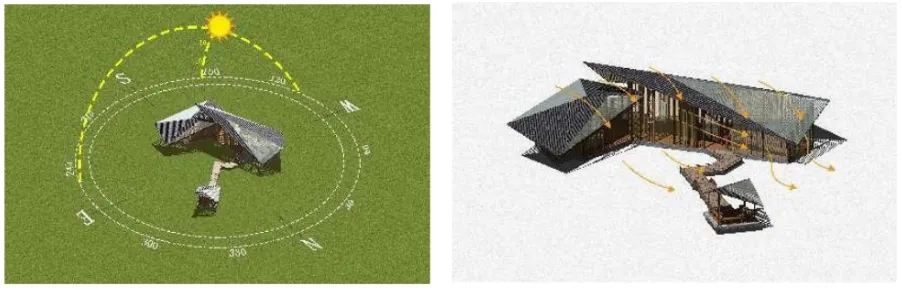
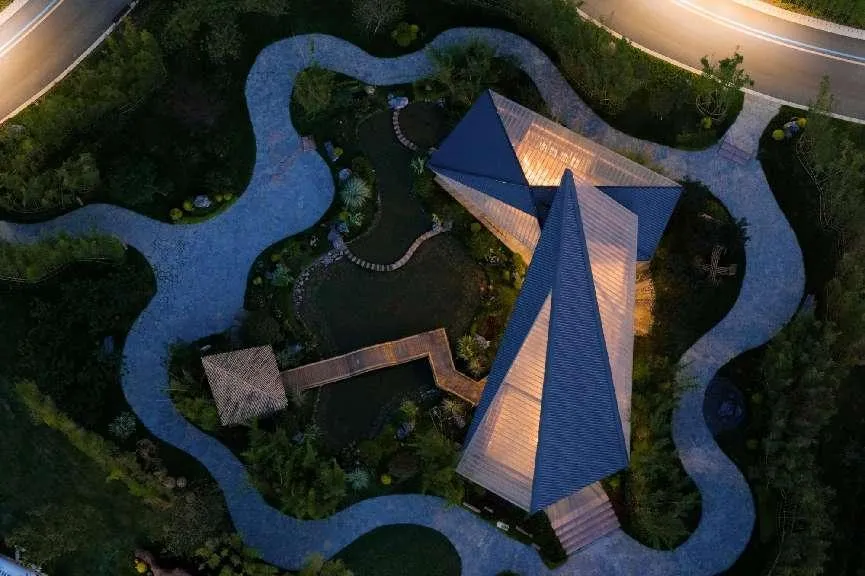
In the design of Meishan Garden, the advanced analytical capabilities of the IES green building software were employed to conduct an in-depth exploration of the site-specific context, building orientations and spatial layout. Guided by the philosophy of bioclimatic architectural design, the project aims to create a Linpan space that embodies the essence of Dongpo culture, integrates modern architectural technology, and delivers exceptional microclimate regulation and thermal comfort.
NO.3 Narrative of Bamboo Mountains
Su Dongpo once wrote:
"Rain washes the Eastern Slope, moonlight turns clear; the townsfolk have gone, only wanderers appear."The design of the main entrance is inspired by Wawu Mountain, one of the world's most magnificent table mountains, shaped with the warm, mild texture of red sandstone.
The main building, Dongpo Workshop, blends unassumingly into the wild woodlands of the Shu region. Taking the poetic imagery of "bamboo leaves drifting down onto the Minjiang River" as its design context, it integrates exquisite traditional mortise-and-tenon craftsmanship with concise contemporary architectural narration, forging a cultural landmark in the hometown of Su Dongpo.
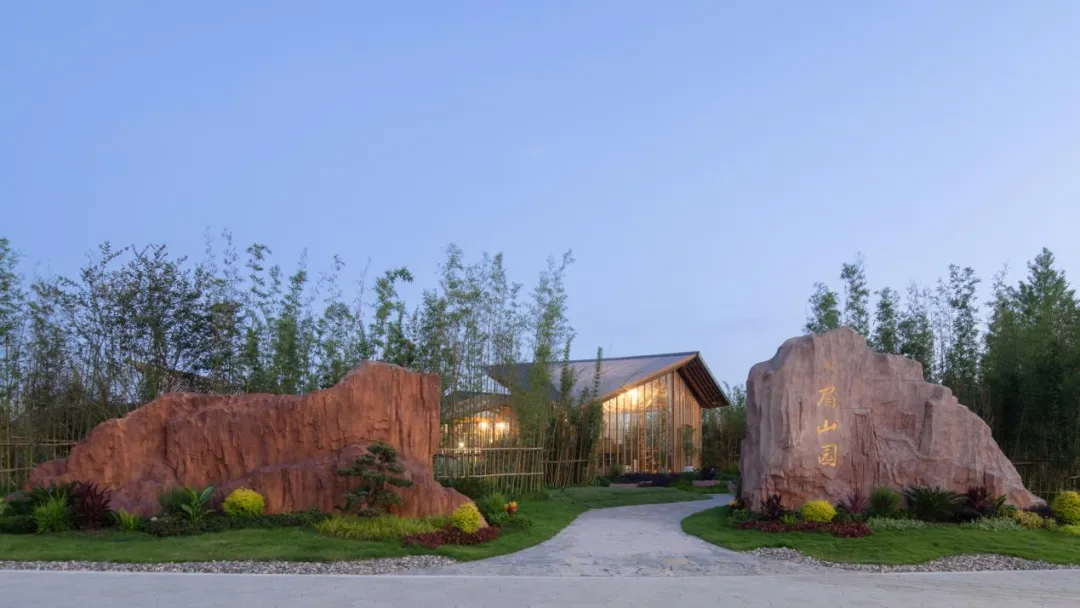
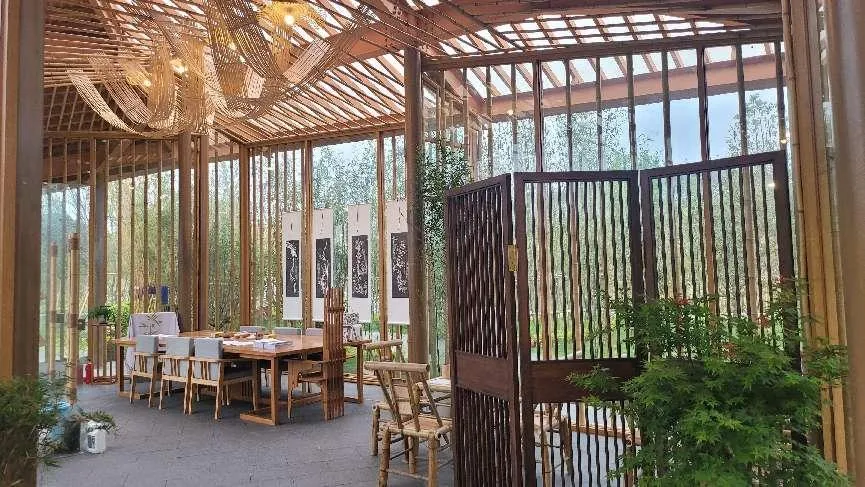
The main structure adopts a light steel structure as its vertical support system, while the envelope structure employs a mixed application of three materials: bamboo, wood and glass.The warmth of bamboo and the coolness of glass further enrich Su Dongpo's philosophical connotation that "Plain happiness is the true flavor of life."
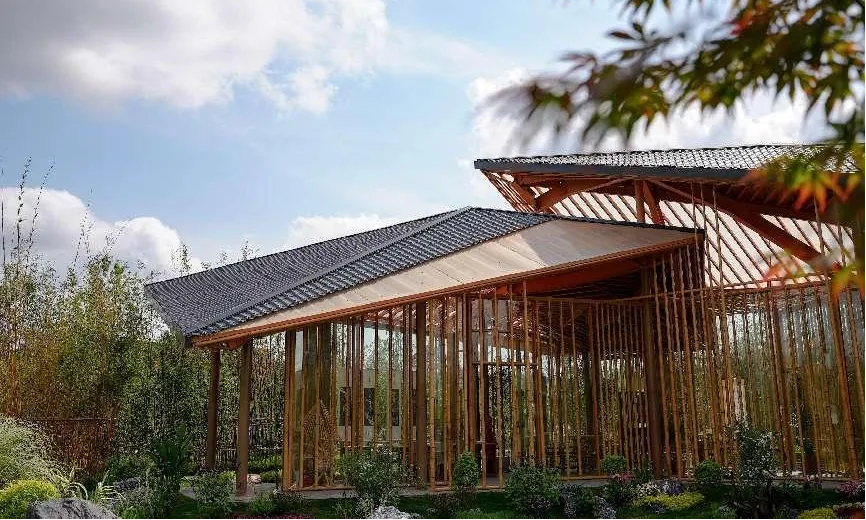
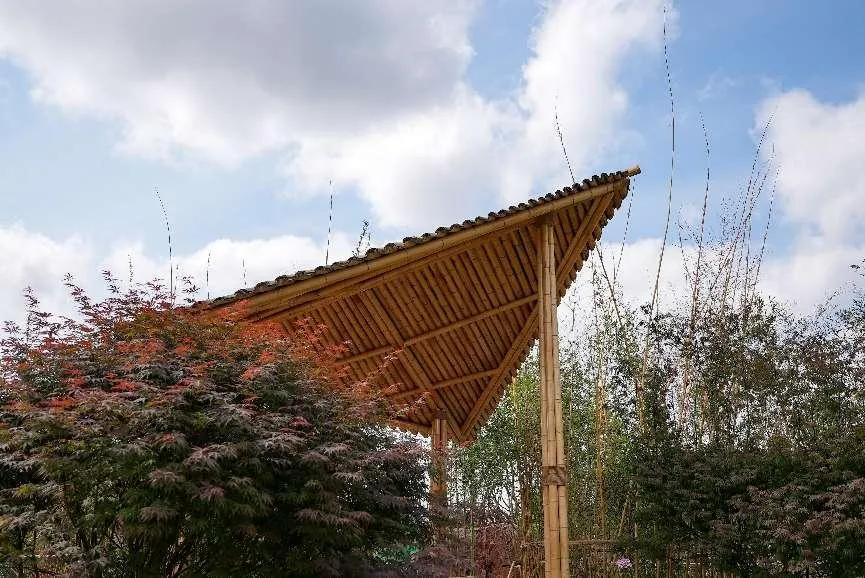
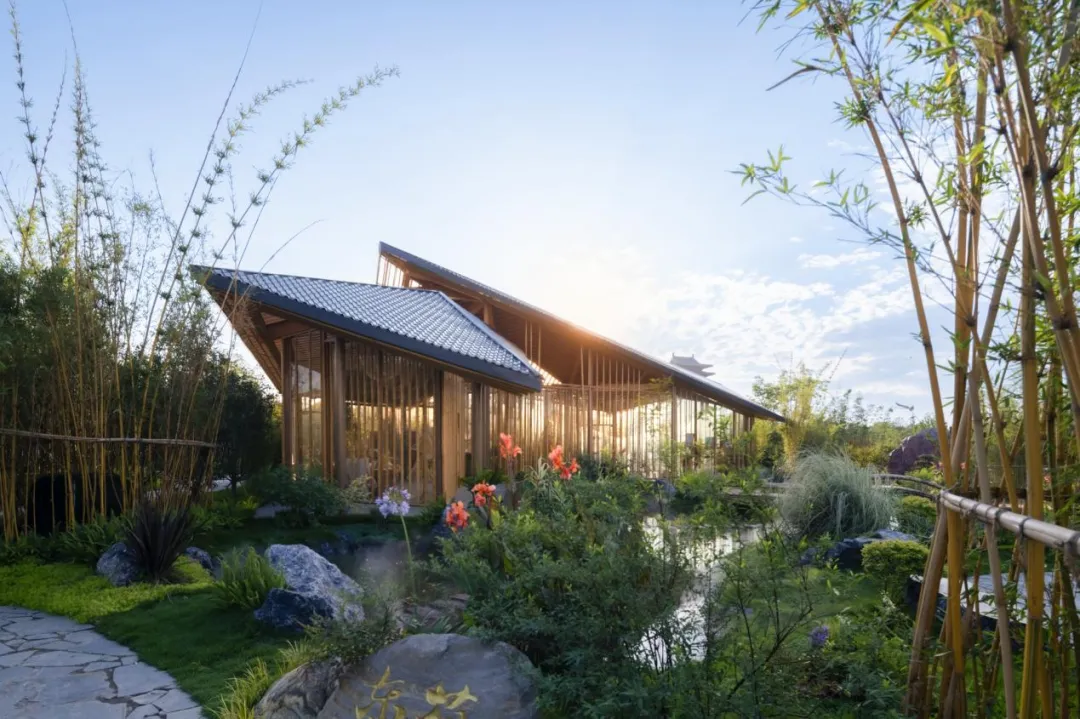 Through the irregular building plan and varied sections, a light and elegant architectural form is created, shaped by the staggered density of bamboo poles.Adopting the traditional pitched roof typology to form an inverted roof, it not only makes full use of natural ventilation and daylighting, but also endows the building with vivid dynamism and an expression distinct from tradition through its unique layering.
NO.4 Integration with Nature
"Connection"and "integration" serve as the core thread running through the entire design of Meishan Garden. Its spatial sequence is derived from the landscape conception of traditional Western Sichuan gardens, featuring a courtyard at the front and bamboo scenery encircling the rear.
The orderly arrangement of bamboo stalks presents a beauty of sequence. It not only guides the flow of air and the interplay of light and shadow, but also establishes a dialogue with the site.
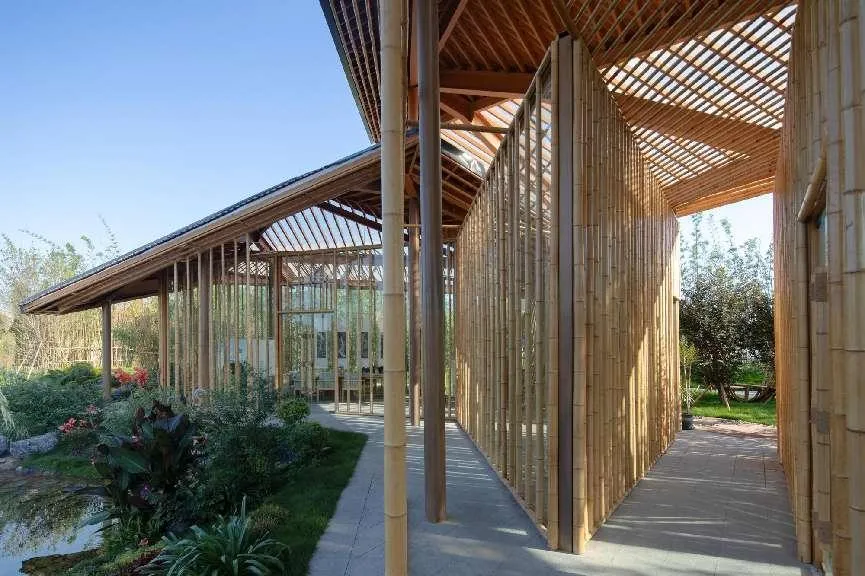
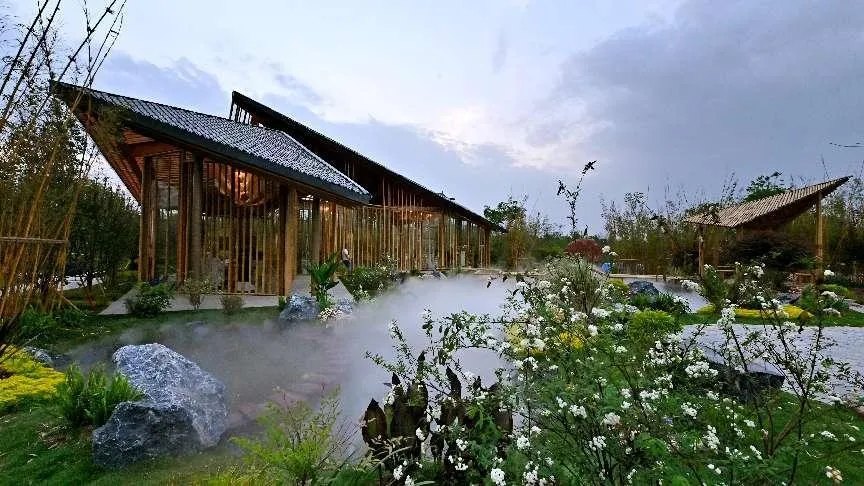
Beyond the Bamboo Workshop, the East Garden, West Garden and Plum Garden each boast unique charm. The seven scenic spots are interconnected, offering ever-changing views with every step.
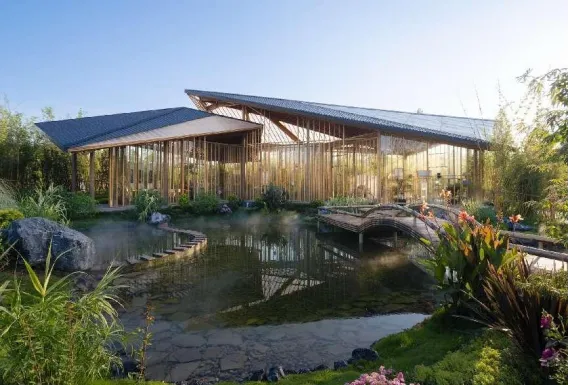
Stepping to the bank of Ruilian Pond and walking across the bamboo bridge, accompanied by the faint creaking of footsteps, one is reminded of the line:
"I climb the Chaoran Terrace and gaze afar; half a moat of spring water, a city full of flowers."Every inch of the garden reveals profound respect for and eulogy to nature.
NO.5 Conclusion
Su Dongpo once wrote: "Where my heart finds peace, that is my hometown."Meishan Garden, a seamless fusion of the simplicity of traditional Western Sichuan gardens and the dynamism of modern architecture, embodies precisely this poetic vision of a beloved homeland.It stands not only as a sincere tribute to Dongpo culture, but also as the most heartfelt ode to Meishan—a land both ancient and full of vitality.
Project Information
- Project Location: 2024 Chengdu International Horticultural Exposition Park, Chengdu, Sichuan
- Design Period: 2023
- Completion Date: 2024
- Owner: Meishan Forestry Bureau
- Design Institute: Sichuan David Architectural Design Co., Ltd.
- Design Team: Liu Weibing, Zhang Biao, Wang Min, Yu Jie, Wei Shen, Tu Jiachong, Liu Ziyi, Lu Dan
- Construction Unit: Meishan Forestry Bureau
- Site Area: 2006.07 ㎡
- Building Area: 223.76 ㎡
- Structural System: Bamboo Mortise-and-Tenon Structure + Light Steel Structure
- Photography: Exist Photography, Zhang Chaojie, et al.