"A good design should respect history and embrace the future, allowing space to serve as a bond that connects people to one another, and the past to the future."—— Liu Weibing (Chief Project Designer)
The former site of Chengdu Electric Power Fittings General Factory is located in the core area of Chengdu's main urban district. Its history dates back to 1939, and it was expanded into the Chengdu Electric Power Fittings General Factory during the Third Front Construction period. As a crucial witness to the industrialization process in Southwest China, the factory was relocated in its entirety after experiencing the reform and opening-up and the evolution of urban development, with its original industrial remains listed as a Historical Building of Chengdu.
Carrying the memories of an era while facing the current scarcity of urban spatial resources, the former site has become a focal case in Chengdu's Demonstration Program for Urban Organic Renewal, as well as one of the most representative revitalization projects in the transformation of industrial land in the central urban area.
Adhering to the philosophy of "Restoring the Old to Its Original State, Innovating While Respecting the Past", the project is committed to organically integrating historical and cultural heritage into modern urban life. On the basis of fully preserving the historical features and industrial charm of the old factory, the project renovates the building structures and landscape environment, and addresses the shortcomings of infrastructure. It innovatively explores the open park model of "the park as a neighborhood", transforming this old landmark into a new urban calling card, and turning the industrial remains into an urban generator that stimulates cultural interaction and innovative lifestyles.
NO.1
Project Background
Chengdu, the Land of Abundance nurtured by the Dujiangyan Irrigation Project—a World Cultural Heritage, has prospered with water for thousands of years. In 2023, to further build itself into a world-famous cultural city, Chengdu developed a 48-kilometer-long park belt along the Jinjiang River. Stretching from the north to the south of the city, this park ribbon runs through the entire urban area. The former site of Chengdu Electric Power Fittings General Factory in Liulichang, Jinjiang District, located by the Fuhe River, serves as a key node of the park belt and a core area for urban renewal in Jinjiang District.
The history of Chengdu Electric Power Fittings General Factory can be traced back to the Power Generation Branch of Qiming Electric Light Company established in 1939, a spark of Chengdu's early industrial civilization. During the Third Front Construction period, Chengdu Electric Power Bureau founded a power fittings manufacturing factory here in 1958, which instantly filled the gap in line fittings production in Southwest China. Over the following 60-plus years, its "Chengdu-made" products spread from the Western Sichuan Plain to the whole country and gained worldwide fame. As one of the top three power fittings manufacturers in China, it even ranked among the National Top 500 Machinery and Electrical Equipment Enterprises, embracing its glorious era.
In 2018, with the overall relocation of the factory, this once bustling land with roaring machines ushered in its "curtain call" and became a forgotten corner in urban development for a time. Nevertheless, its historical value has finally been recognized: its main buildings were selected into the
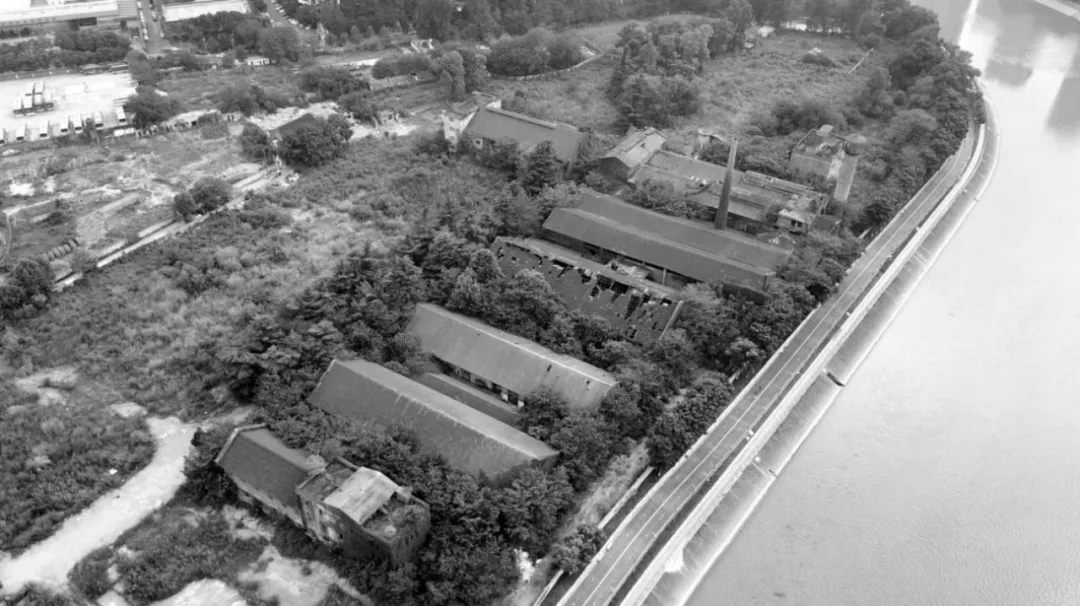
▲Before renovation
As a demonstration project for the revitalization of industrial heritage in Jinjiang District, the Liulichang area where the former site of Chengdu Electric Power Fittings General Factory is located embodies multiple urban renewal issues, including heritage conservation and presentation, industrial heritage revitalization, the construction of urban ecological and cultural corridors, regional industrial upgrading, and community renewal.
NO.2
Symbiosis of Old and New, Reconstruction of Memory
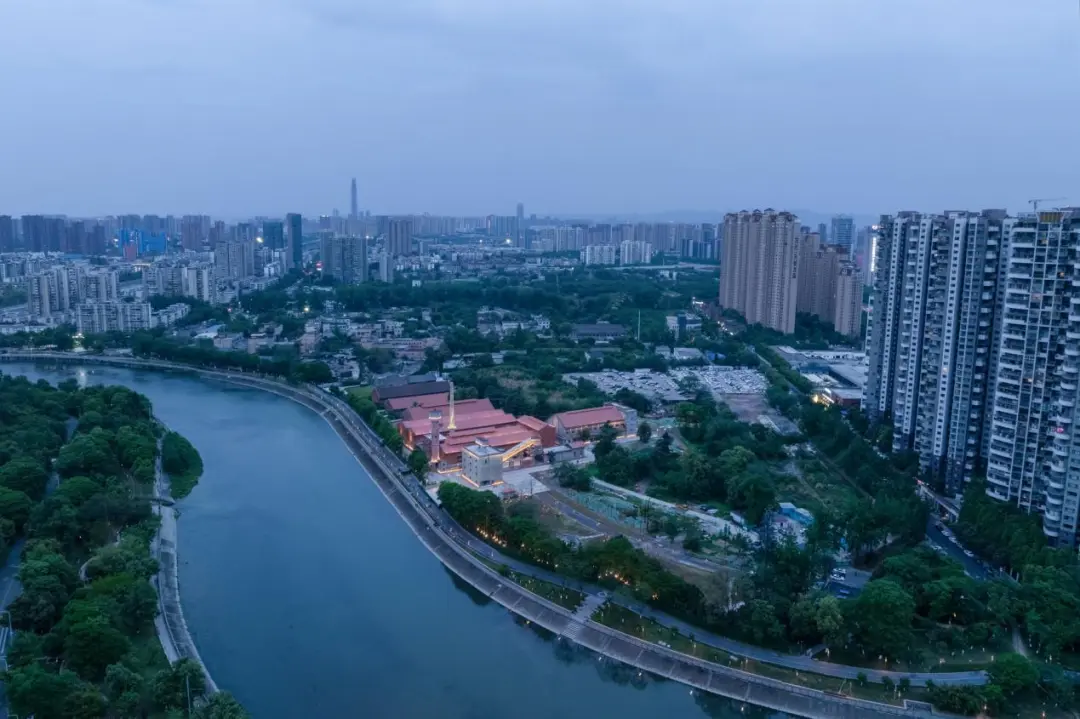
Located inside the South 3rd Ring Road of Chengdu, on the east bank of the lower reaches where the Fuhe River and Shahe River converge, the project covers an area of 78 mu (approximately 5.2 hectares). It occupies a gateway position in Liulichang, a place that connects the past and the present.
To the east, the site adjoins the reviving cultural block themed on "Kiln Site Memory"; to the west lies a dense cluster of residential buildings brimming with the vitality of daily life. To the south, it faces the modern skyline of the East Financial City in the High-Tech Zone, engaging in a silent dialogue with the emerging business cluster. To the west and north, it is embraced by a concentration of high-rise residential buildings.
Standing at the intersection of tradition and modernity, tranquility and dynamism, the site outlines a diverse and symbiotic urban landscape.
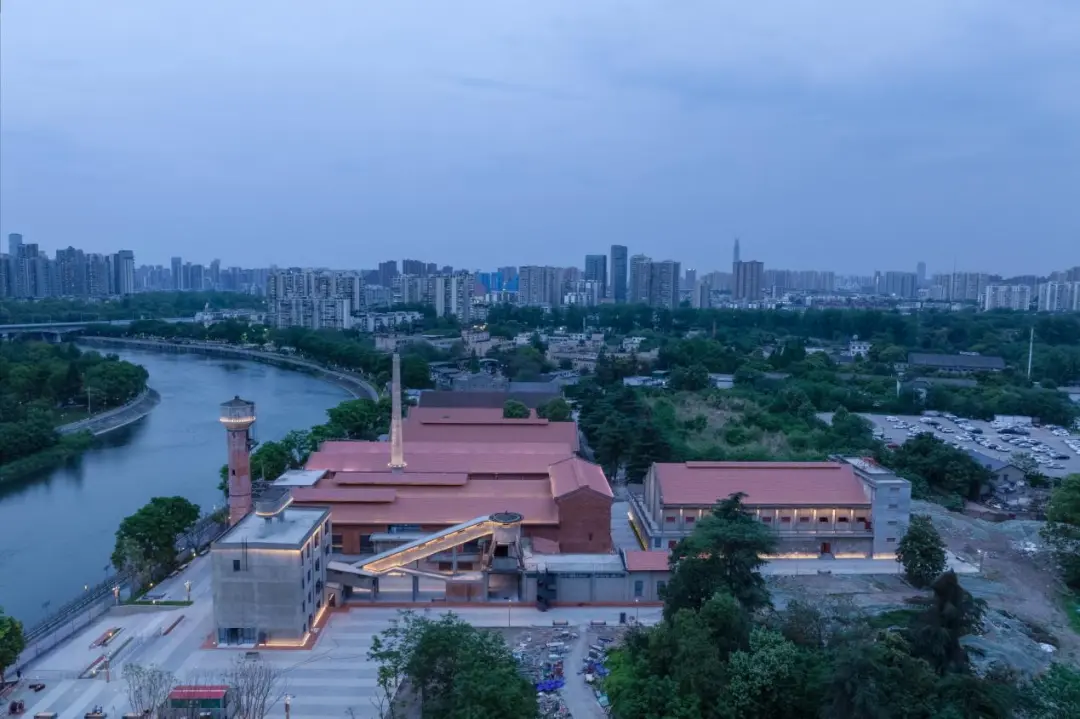
▲Aerial View After Renovation
The design focuses on the renovation of the historical building complex and the overall improvement of the surrounding landscape. The total area is 39,636.5 ㎡, with the historical buildings covering approximately 8,109.5 ㎡ and a total floor area of about 10,519.5 ㎡.
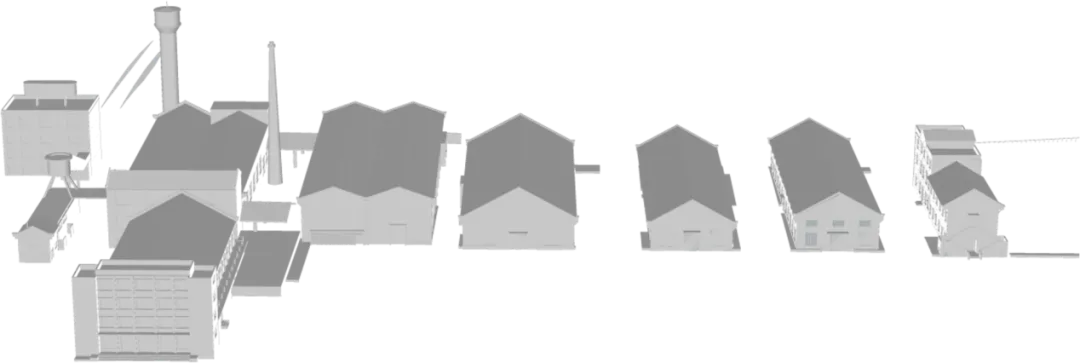
The conservation and revitalization of the 8 historical buildings bearing the marks of the era are the top priority of this design. As irreplaceable cultural heritage, these buildings are living fossils of the site’s industrial memory. The historical building complex features diverse styles:
Building No. 1 (Administrative Office Building), originally constructed in 1941 as a power equipment house, is built with blue bricks. Its north and south wings adopt a two-story brick-wood structure and a three-story brick-concrete structure respectively.
- Buildings No. 2 to No. 7, including the maintenance workshop, copper and aluminum workshop, and foundry workshop, are red-brick industrial plants completed in 1958. They are single-story brick-wood structures with Howe trusses and red machine-tile roofs, highly representative of their era.
- Building No. 8 (Staff Club) is a brick-concrete structure built with blue bricks, with four stories on the south side and two stories on the north side.
The water tower, chimney and sand slide on the site are not only iconic visual focal points, but also the soul that reshapes the site’s spirit and connects the past with the future.
▲Site Building Layout
Led by architect Liu Weibing, the design team adopted the core philosophy of Cultural Empowerment, Ecological Integration. While completing building restoration to extend their service life and carrying out moderate spatial intervention, the team ingeniously introduced new installation elements and visitor circulation routes.
Ultimately, the entire remains of the Electric Power Fittings Factory have been shaped into a narrative spatial sequence of the Land of Abundance, with Jinjiang Park as its main vein, naturally extending like leaf veins.
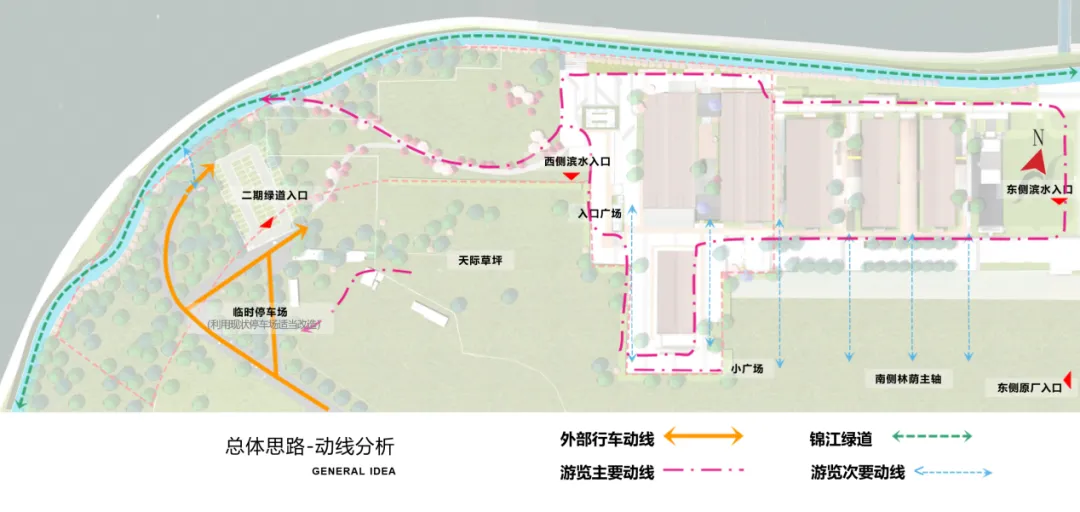
▲Circulation AnalysisThe design strictly preserves the industrial texture and spatial pattern of the factory compound, with the structures, materials and details of the buildings retained and restored in their original form. Through methods such as engraving the factory’s development history with brass inscriptions on the ground, installing vintage-style street signs, and creatively using old artifacts for decoration, the profound industrial history is transformed into an artistic language in public space, woven into a frozen chronicle that greatly enhances visitors' sense of historical immersion.
Meanwhile, all the original trees on site, including goldenrain trees and cedars, have been preserved. Landscape and lighting design are deeply integrated, with light as the brush and greenery as the scene, vividly recounting the once glorious industrial past of this land. In the end, a contemporary narrative space that is visually and experientially balanced and rich in texture is created.
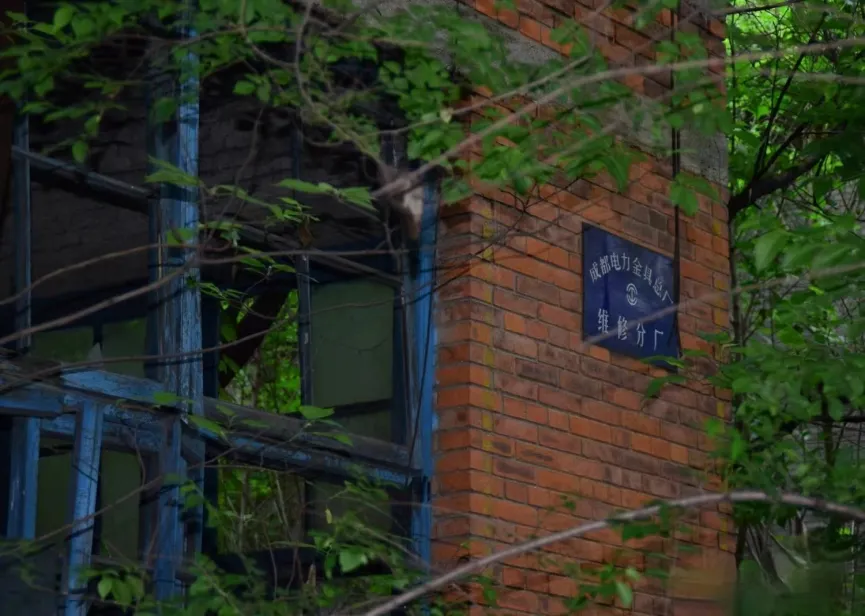
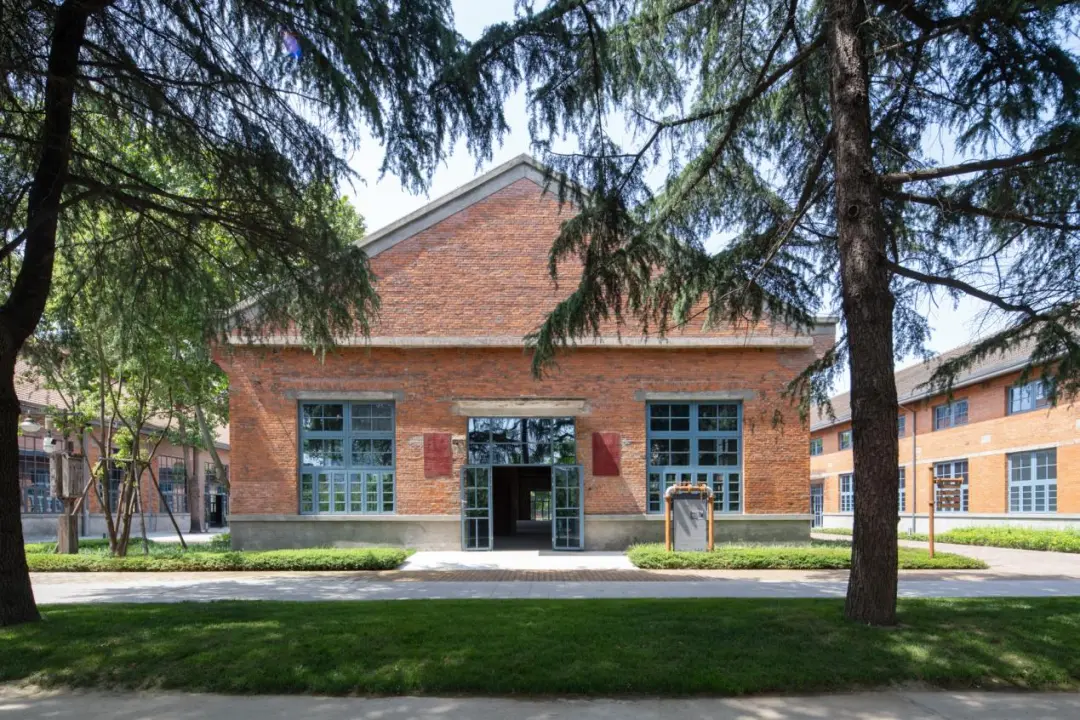 ▲Facade of the Renovated No. 3 Workshop
Through its exquisite control of light, materials and space, the design team has successfully activated the intrinsic connection between historical relics and the modern context. The carefully integrated spiral staircase and ecological green corridor achieve a dual elevation of aesthetics and functionality, while respecting the original architectural character.
This forward-thinking renewal strategy has earned the project the acclaim of the Asian Urban Renewal Award:“Not a mere retro symbol, but a continuation of memory in modern space, forming a unique renewal narrative of Chengdu. It strikes a delicate balance between preservation and innovation, redefining the value of public space.”
Rooted in the technical aesthetics of industrial heritage regeneration, this project sets a benchmark for urban renewal featuring the coordinated development of culture, ecology and economy through innovative architectural conservation and scenario creation. This practice not only contributes a “Chengdu Model” for the revitalization of industrial heritage nationwide, but also reshapes the logic of symbiosis between industrial civilization and future cities.
Building on this successful experience, the Park City Administration of Jinjiang District will take this project as a starting point, integrate resources across the district, and strive to build a new highland for urban cultural tourism integrating culture, business, tourism, sports and exhibitions.NO.3
Chengdu Renewal Narrative
Reshaping Time and Space: Transforming an Industrial Rust Belt into a Vibrant Living Stage
After more than 700 days and nights, a former industrial zone has quietly been reborn. The red-brick walls still stand tall, and the Bauhaus-style steel trusses remain sturdy. Yet the air no longer carries the roar of machinery, but the aroma of coffee and the cheerful chatter of creative markets. Here, an experiment in revitalizing industrial heritage is unfolding – it is not a simple renovation, but a profound dialogue about memory, function, and aesthetics.
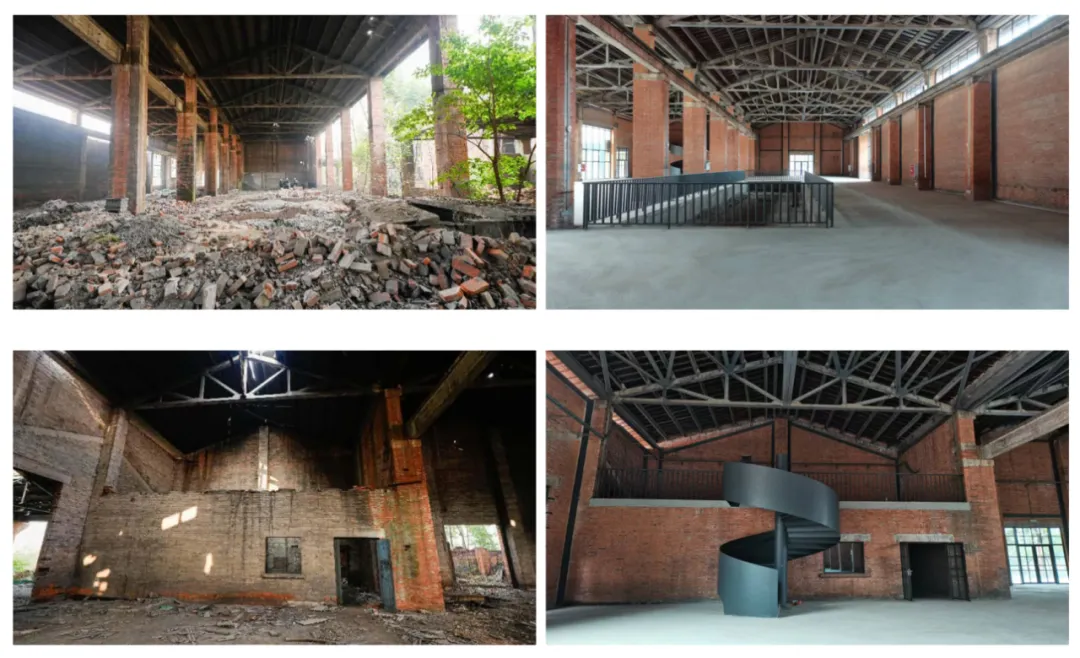
▲Comparison of No. 5 Workshop Before and After RestorationRestoring the Old as It Was, Making Historical Traces "Readable"
Walking through the renovated factory compound, what first strikes visitors is the unique texture of the symbiosis of old and new. Upholding the principle of "restoring the old to its original state, and complementing the new with contemporary elements", architects carried out meticulous restoration on the original buildings – cleaning the walls, trimming the roof trusses, and reinforcing the structures. Every step strives to extend the life of the buildings while preserving the details that tell the story of history.
Typical "historical symbols" such as the red-brick facades and industrial trusses engage in a time-spanning dialogue with the newly introduced glass and steel. This juxtaposition of materials is not a confrontation, but a resonance, creating a layered sense of time.
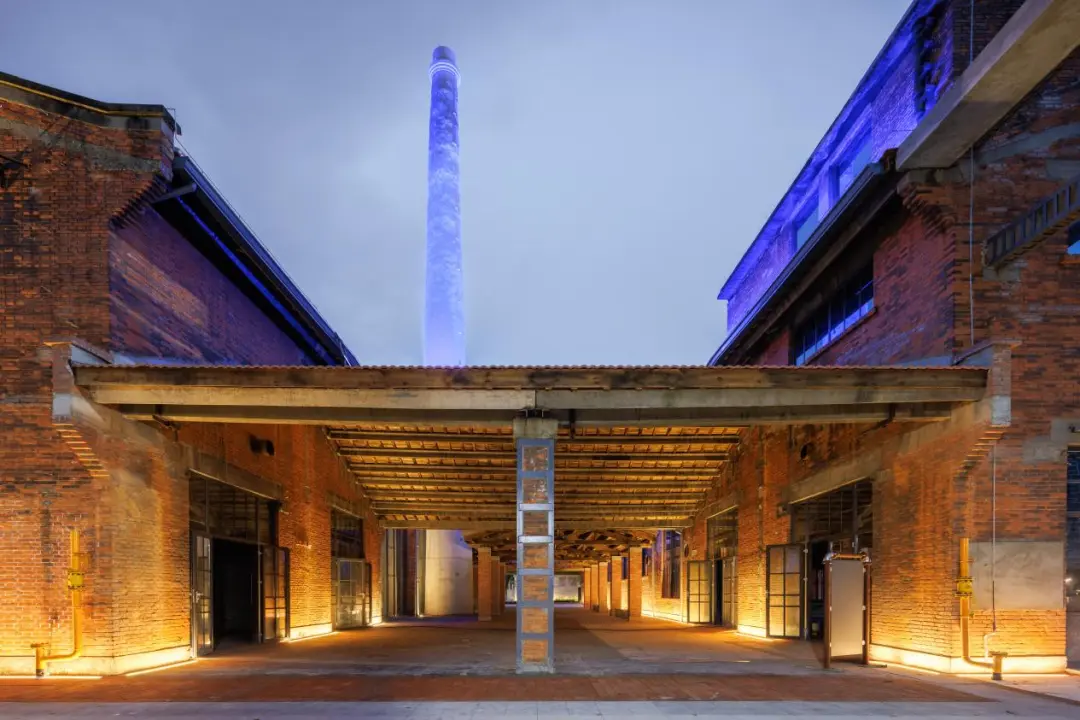 ▲The Iconic Chimney That Reshapes the Site’s Spirit
Human Vitality Transforms Production Workshops into Urban Spaces
The core of the renovation lies in restoring "usable value" to the abandoned factory buildings. Workshops once filled with machinery have now been transformed into cultural and creative spaces, community service hubs, and ecological green corridors.
This former "industrial rust belt" is set to become one of the most vibrant "stages" in the city, where new stories unfold every day.
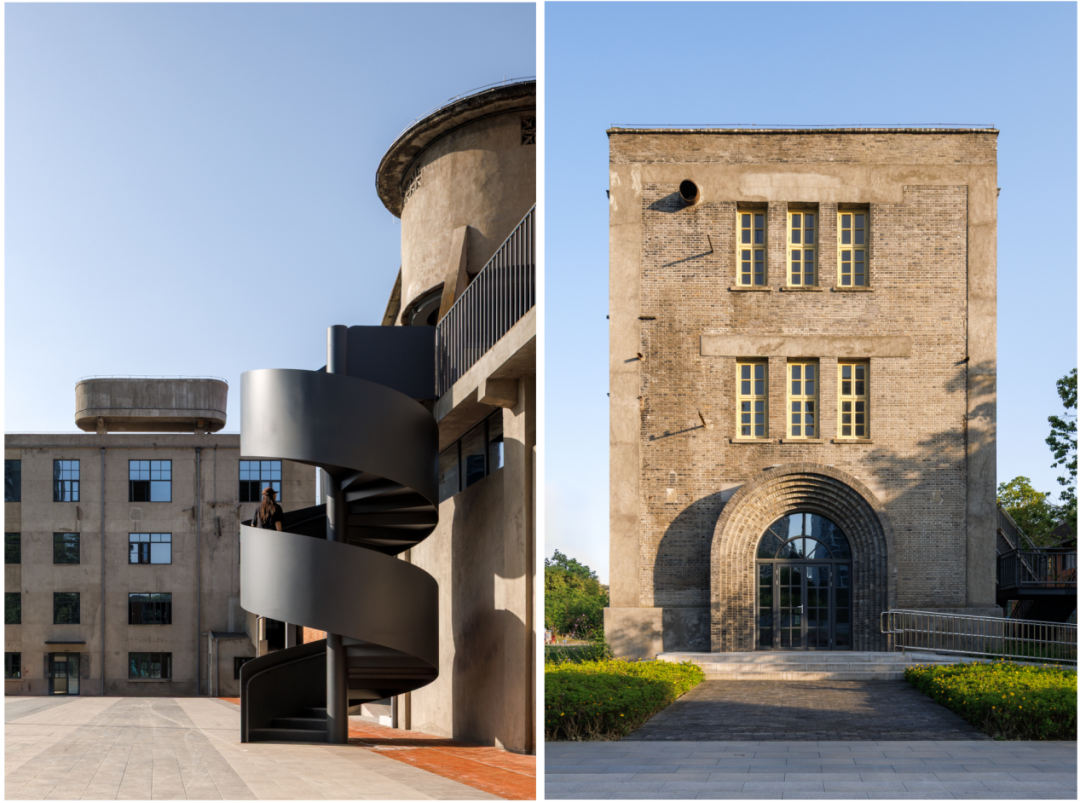
▲The Renovated Sand Slide and No. 1 Office Building
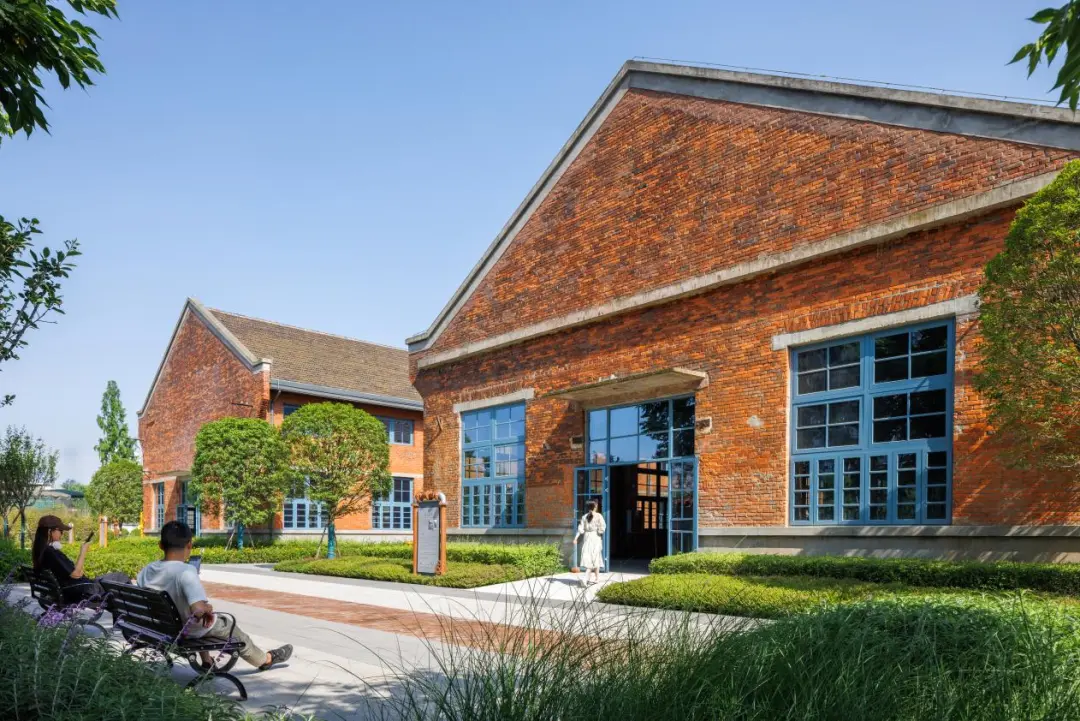
▲Partial Facade of the Factory Building Along the Jinjiang Greenway
Reviving the Past, Letting Memory Shape the Design
Perhaps the most innovative aspect of this project is its adoption of participatory design. During the renewal process, the design team invited former factory employees and surrounding residents to co-plan the spatial functions.These vivid personal memories were ultimately integrated into the design of the public areas. Collective memory, acting as a form of social capital, has transformed cold physical space into a place of belonging filled with a sense of identity. This kind of renewal, therefore, carries warmth.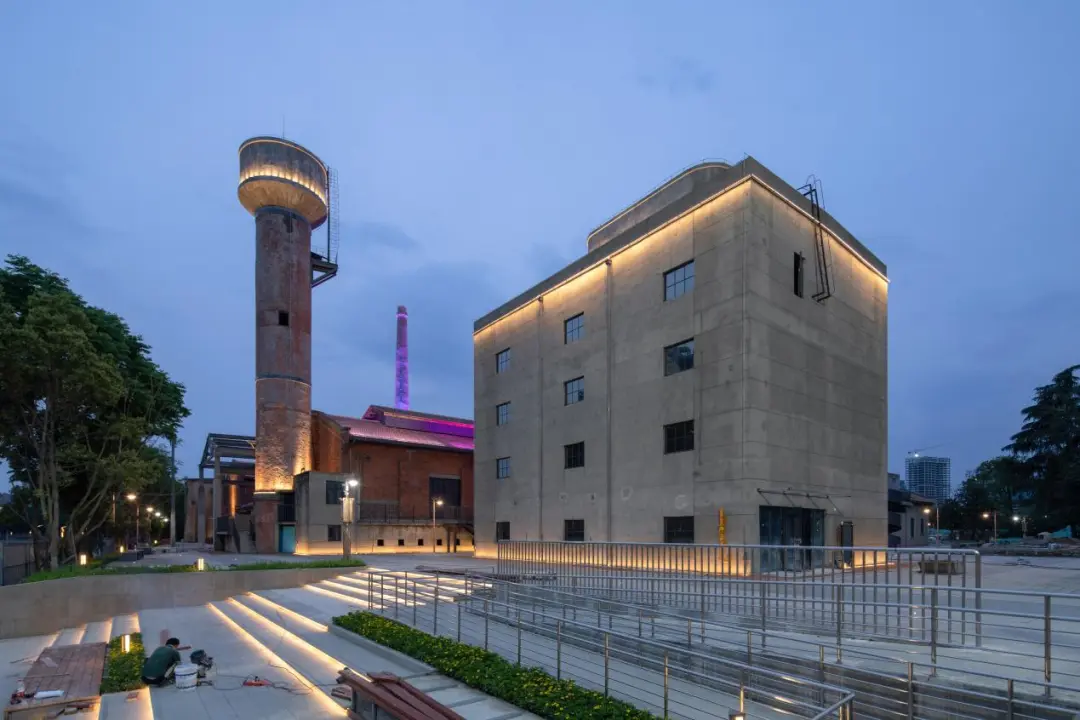
▲West Waterfront Entrance of the Site Under Construction
A Dialogue Between China and the West: Where Linpan Courtyards Meet Bauhaus
The most pleasant surprise lies in the project's bold aesthetic fusion. Guided by the concept of a Park City, Liu Weibing, the chief designer, juxtaposes the unique courtyard layout of Sichuan Linpan with a cutting-edge contemporary design language.
The rigid lines of the industrial buildings are integrated with the tranquil layers of traditional courtyards; the rational spirit of Bauhaus complements the freehand artistic conception of Oriental aesthetics. This attempt at "Oriental Artistic Conception + International Expression" endows the industrial heritage with both regional characteristics and a global vision, demonstrating the unique cultural confidence of Chengdu.
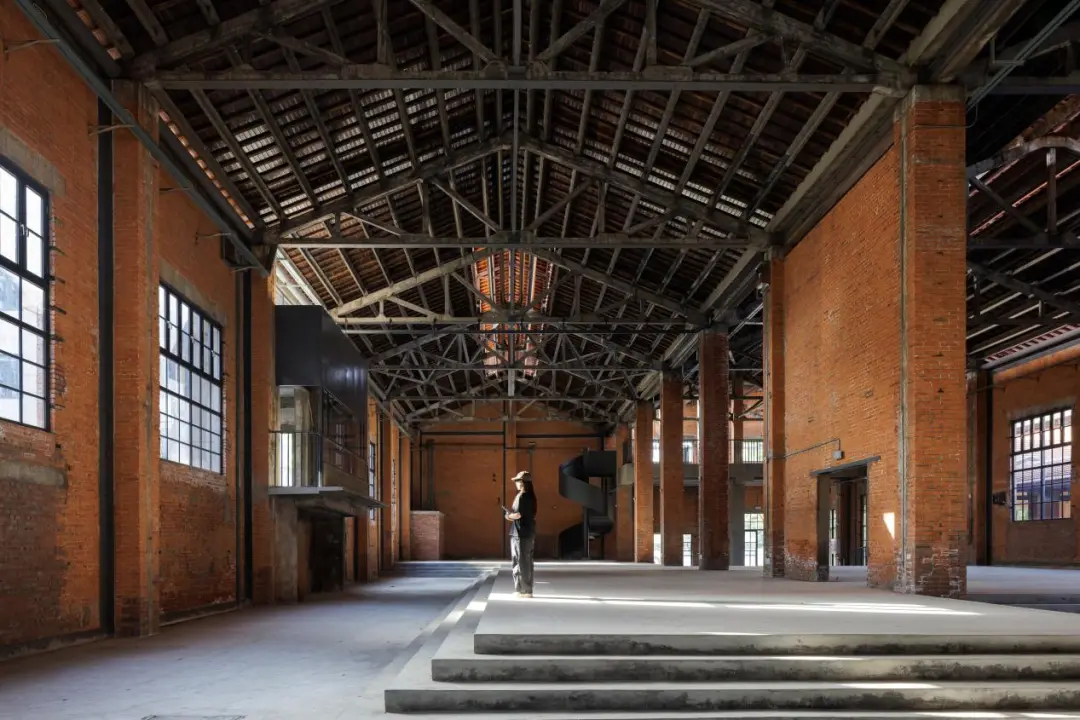
▲Interior Space of No. 4 Factory Building
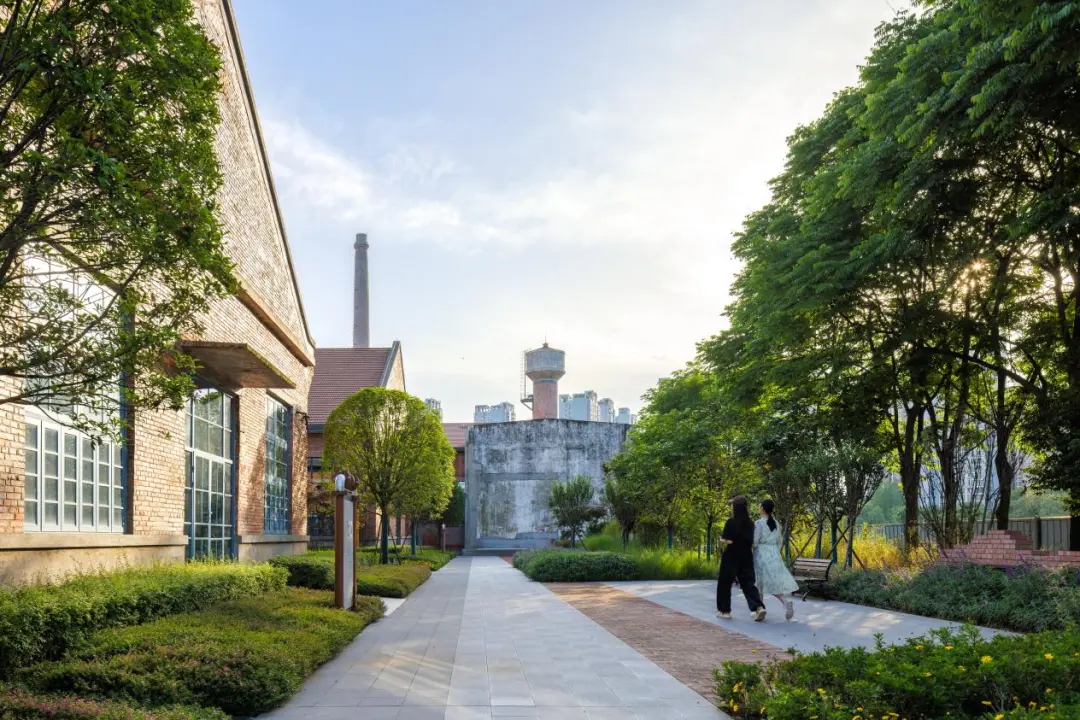
▲South View of the Exterior of No. 4 Factory Building
The significance of this project may well transcend urban renewal itself. It shows us that industrial heritage is not a burden on the city, but a precious asset; history is not a drag on progress, but a source of innovation.
As rusted factory buildings transform into vibrant stages, what we witness is not only the revitalization of a single area, but also the elevation of a philosophy of urban development. Spaces that carry collective memory can indeed become the starting point for the future.
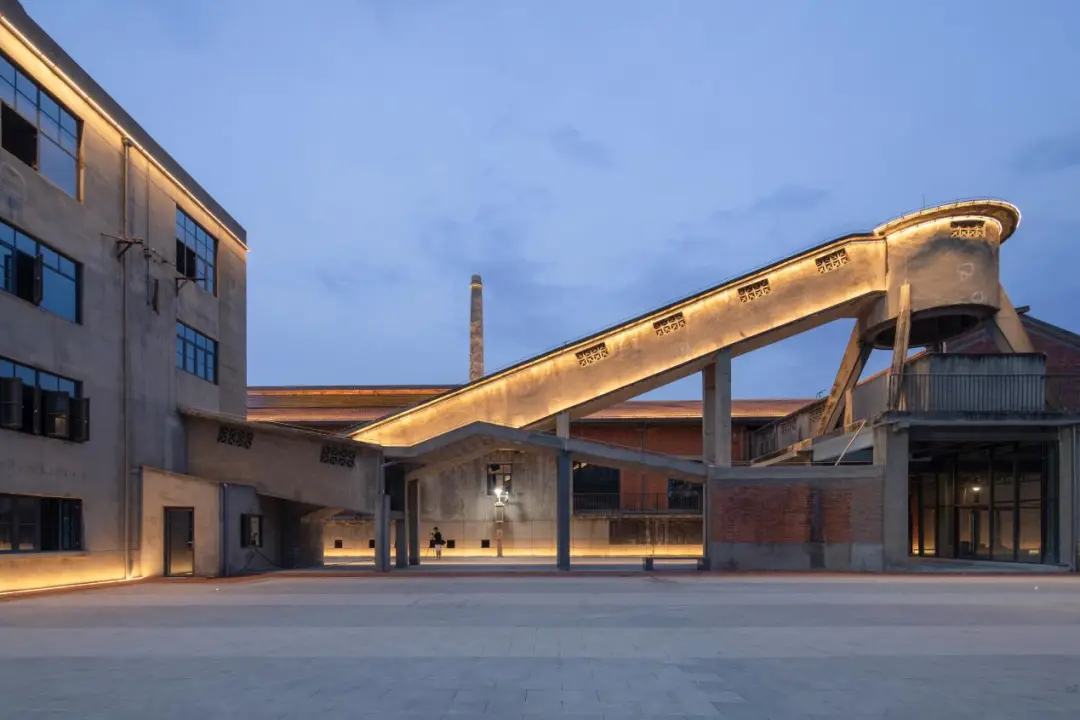
▲Night View of the South Entrance Plaza
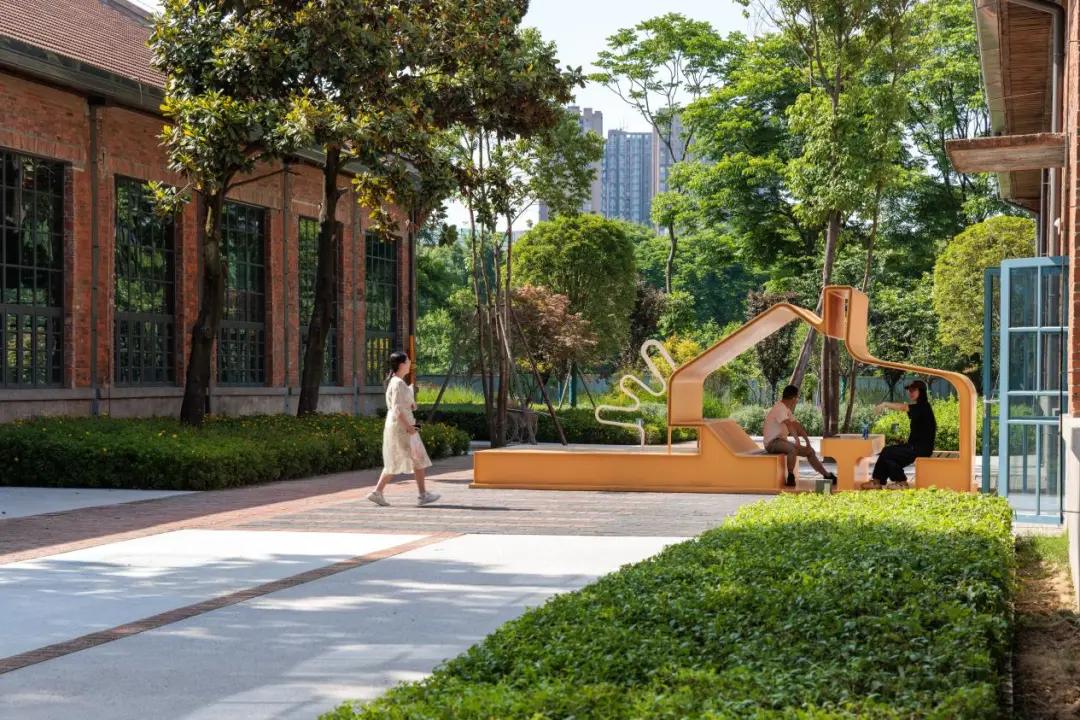
▲A Revitalized Space Integrated into the Community
True urban renewal is never merely the transformation of physical space, but also the continuation of memory, the reconstruction of community, and the inheritance of culture.Here, industrial heritage is not a past to be erased, but a future to converse with; renewal is not a rupture, but a continuation; and space is not just a container, but a living scene filled with warmth.
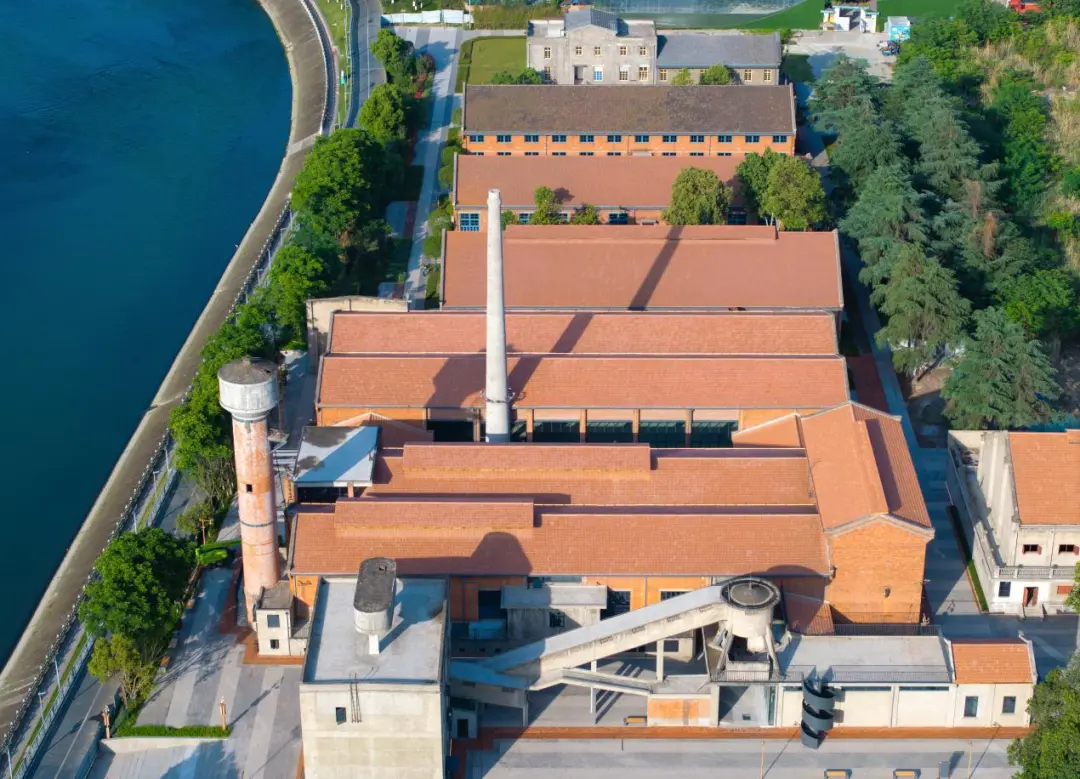
▲Overall Aerial View After Restoration
Only when we learn to converse with history, coexist with memory, and build together with the community can a city truly become a place for poetic living. This is perhaps the most precious insight that industrial heritage offers to contemporary cities.
Project Information
Project Name: Renovation and Upgrading of the Former Site of Chengdu Electric Power Fittings General FactoryProject Honor: AURA Asian Urban Renewal Award 2025Project Location: No. 72 Kechuang Road, Jinjiang District, Chengdu City, Sichuan ProvinceDesign Period: 2022Completion Time: 2025Owner: Chengdu Jinjiang Greenway Construction & Investment Group Co., Ltd.Design Firm: Sichuan David Architectural Design Co., Ltd.Design Team: Liu Weibing, Jiang Like, Zhang Biao, Xiao Huanghai, Yu Jie, Luo Wanshu, Tu Jiachong, Lu Dan, Liu ZiyiConstruction Firms: Sichuan No.3 Construction Engineering Co., Ltd., Chengdu Construction Engineering No.4 Construction Engineering Co., Ltd.Land Area: 39,636.5 ㎡ (3.96365 ha)Building Area: 10,519.5 ㎡ (1.05195 ha)Structure Types: Brick-wood Structure, Brick-concrete StructurePhotography: Presence Photography