A Dwelling Holds a Legend
An Artistic Sanctuary by the Jinniu Dam
Amidst the lush greenery of Jinniu Dam in Chengdu stands the former residence of Mr. Zhang Daqian, a renowned Chinese master of traditional Chinese painting, which bears the marks of his artistic career and daily life. In the autumn of 1947, Zhang Daqian rented this property from his close friend Yang Xiaoci, and purchased it by the end of 1948, making it the only real estate he ever acquired in Chinese mainland. The "Former Residence on Jinniu Dam" witnessed the final years of Zhang Daqian on the Chinese mainland, and also marked the starting point of his journey to the world.
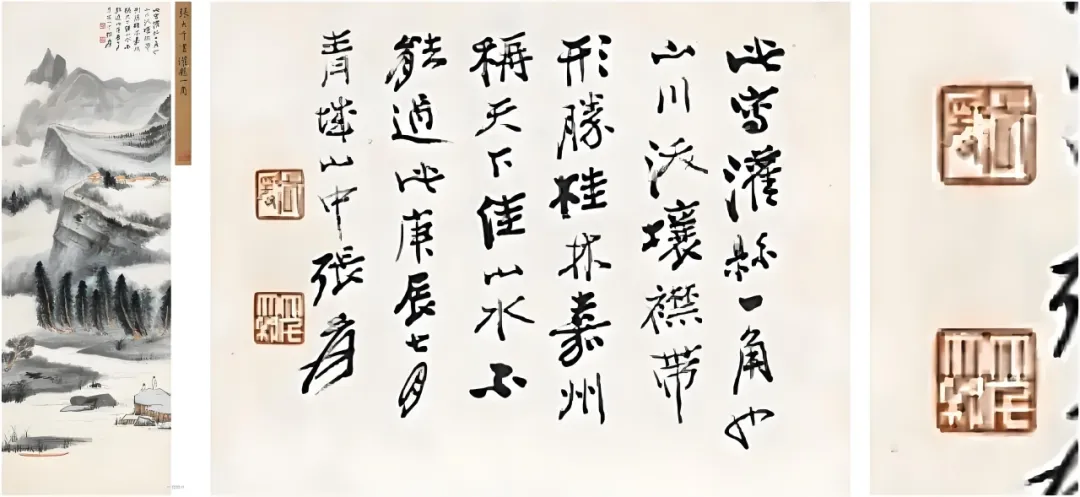
▲A Corner of Guanxian by Zhang Daqian, 1940
(From left to right: Full painting, Zhang Daqian's inscription, Zhang Daqian's seal)
Zhang Xinyu, Zhang Daqian's son, wrote in My Father and His Courtyard: "In the autumn of 1943, after my father returned to Chengdu from Dunhuang, he had no fixed residence until 1947, when he built his own home at Jinniu Dam in the western suburbs of Chengdu. There was about one mu of open space left, where he planted various flowers and plants. The following year, my father went to Hong Kong, and later, in 1950, he was invited to India to give lectures and conduct investigations, never to return." This building stands as a crucial historical testament to Zhang Daqian's life, possessing immense historical value.
During those years, he married Xu Wenbo, his wife who accompanied him for the rest of his life, and taught his disciples He Haixia, Liu Lishang and others day and night—disciples who would later achieve remarkable artistic accomplishments. In this brick-and-tile house, Zhang Daqian sorted out the Dunhuang murals and created a vast number of works, reaching the second peak of his artistic career.
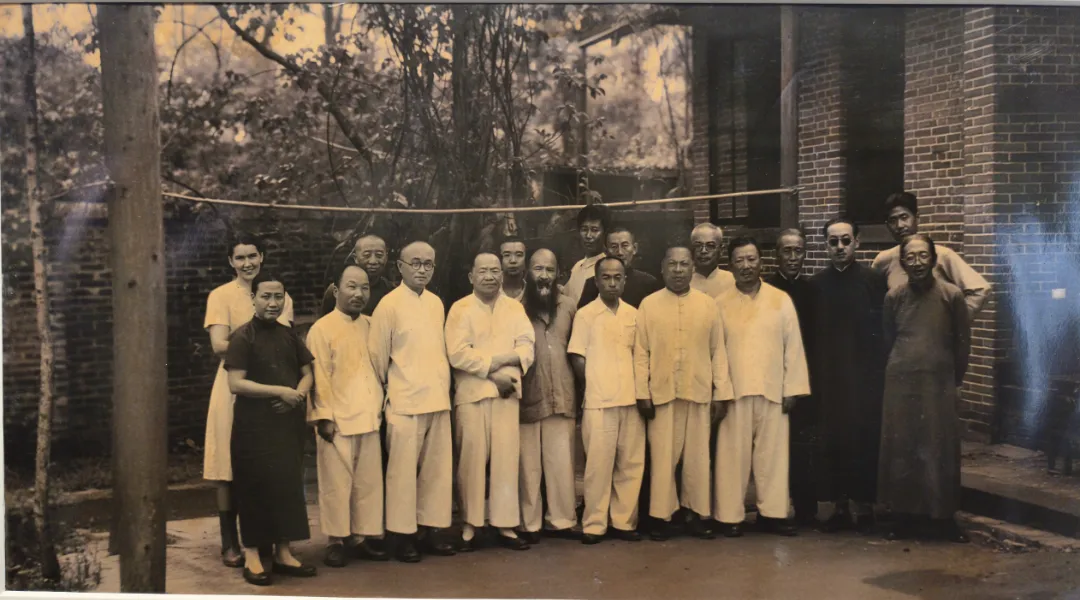
▲Zhang Daqian receiving friends at his former residence in Jinniu Dam, May 1948. Source: Jinniu Hotel
As the only self-built residence of Zhang Daqian, a world-renowned master of traditional Chinese painting, in Chengdu and his last residence on the Chinese mainland, this house was named Shuiniu An (税牛广), pronounced tuō niú ān (homophonic to "Tuoniu An", meaning "Nirvana of the Ox").
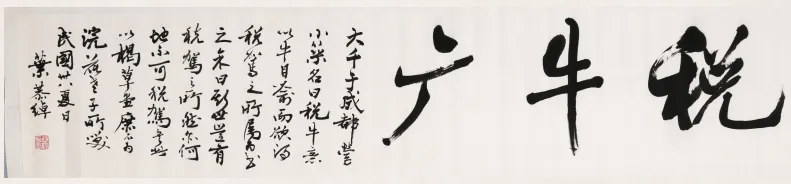
The name draws inspiration from the phrase shuijia (税驾,meaning "to end a journey, to settle down"), pronounced tuō jià. It ingeniously integrates the character "Niu" (Ox) from Jinniu Dam and Zhang's self-metaphor as an "ox", while humbly referring to his new home as "An" (a humble abode). This fully demonstrates his extraordinary wisdom and profound erudition. The extended implication carries a touch of playfulness: it symbolizes that Zhang Daqian, like an "ox" freed from its reins, broke free from the shackles of living under someone else's roof, and finally found his ideal home—a "thatched cottage", a pastoral retreat where he could enjoy the joy of the "Peach Garden", echoing the poetic charm of Tao Yuanming's Peach Blossom Spring.
Preservation Brings New Life
Ingenious Restoration Empowered by Professionalism
The architecture of Zhang Daqian's Former Residence is itself a model of western Sichuan residential buildings from the Republican Period. Its layout, craftsmanship and style silently narrate the unique living aesthetics and cultural temperament of Chengdu in that era. The structural components and detailed textures of this brick-and-tile house embody an architectural form that integrates traditional Chinese styles with modern western wooden trusses, while absorbing local architectural features of China. For instance, the eave adopts the "Fire Chain Ring" pattern instead of the traditional eave tiles and drip tiles. Technically, both the overall structure and detailed construction reflect the scientific and technical characteristics of Chinese wooden architecture in a specific historical period.
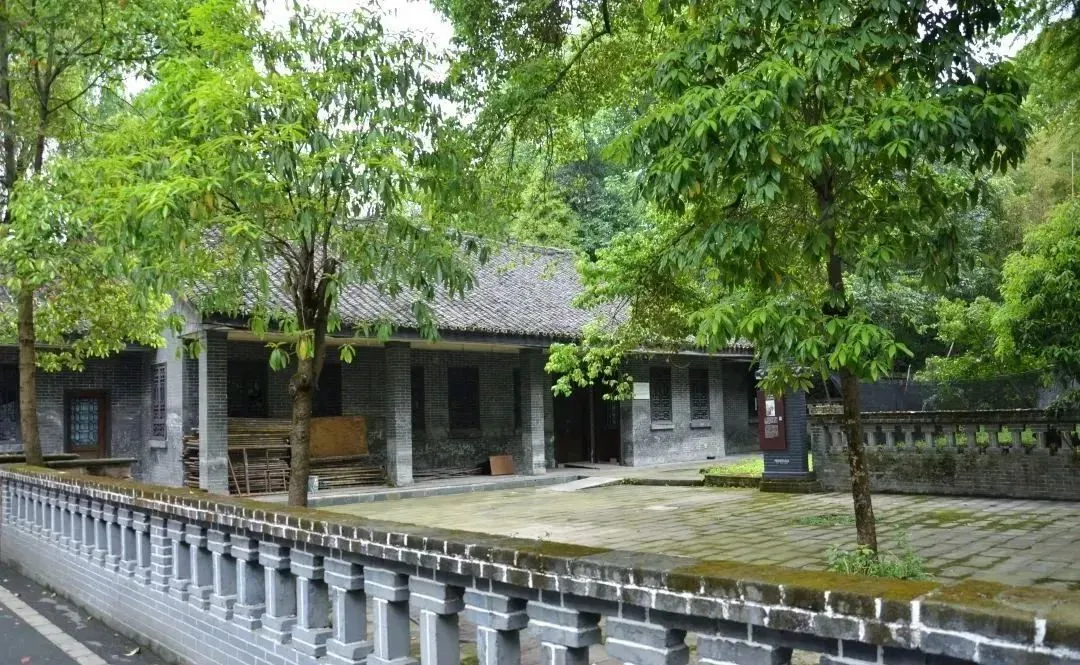 ▲
▲Zhang Daqian's Former Residence before Restoration
The building features large blue brick pillars supporting the eaves, with the eave edges designed in the "Fire Chain Ring" style. The front yard is a three-tiered terraced garden; ascending the stone steps, one reaches terraces with semi-circular and arc-shaped layouts, enclosed by blue brick railings with hollowed-out structures. At the end of the terraces lies a small earth slope that screens off the outside world, lending the residence a serene charm of "living by the mountains". With a courtyard in front and sloped land beside, the landscape design embodies "the delicacy of southwestern gardens and the ethereal grace of western Sichuan gardens", boasting high artistic value.
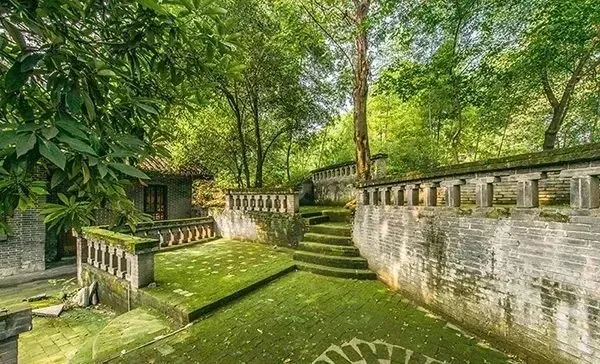 ▲
▲Announced by the People's Government of Sichuan Province as the ninth batch of Provincial-Level Cultural Relic Protection Units on January 10, 2019
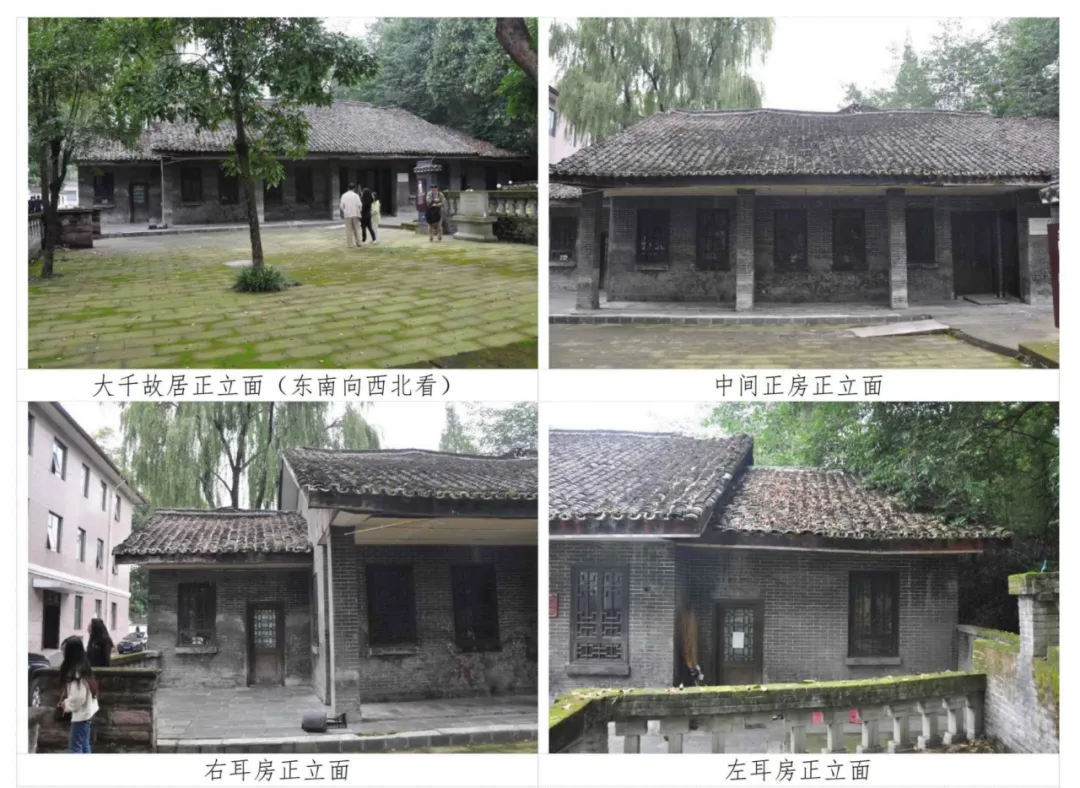
▲Survey conditions of Zhang Daqian's Former Residence before Restoration
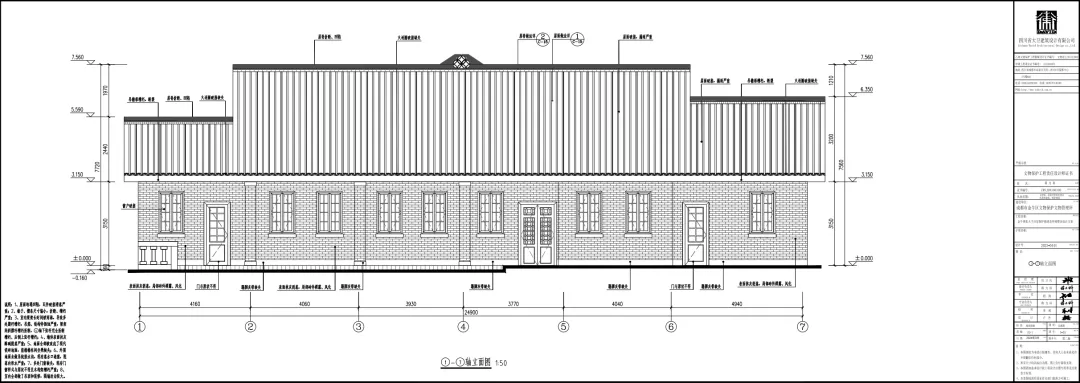
The former residence covers a total area of approximately 600 square meters, with a total construction area of about 330 square meters. It consists of a main hall and side chambers on both sides, with courtyards and gardens at the front and rear. The roof is of the overhanging gable style: the main hall in the center has a higher roof, while the side chambers have slightly lower ones. The building faces northwest to southeast, at an azimuth of approximately 150 degrees. When Zhang Daqian purchased the property, it was originally a wooden structure; he later renovated it into the brick-wood structure preserved today, with brick pillars and walls at the bottom supporting the wooden frame above. The roof is covered with small blue tiles, and fitted with wooden doors and windows.
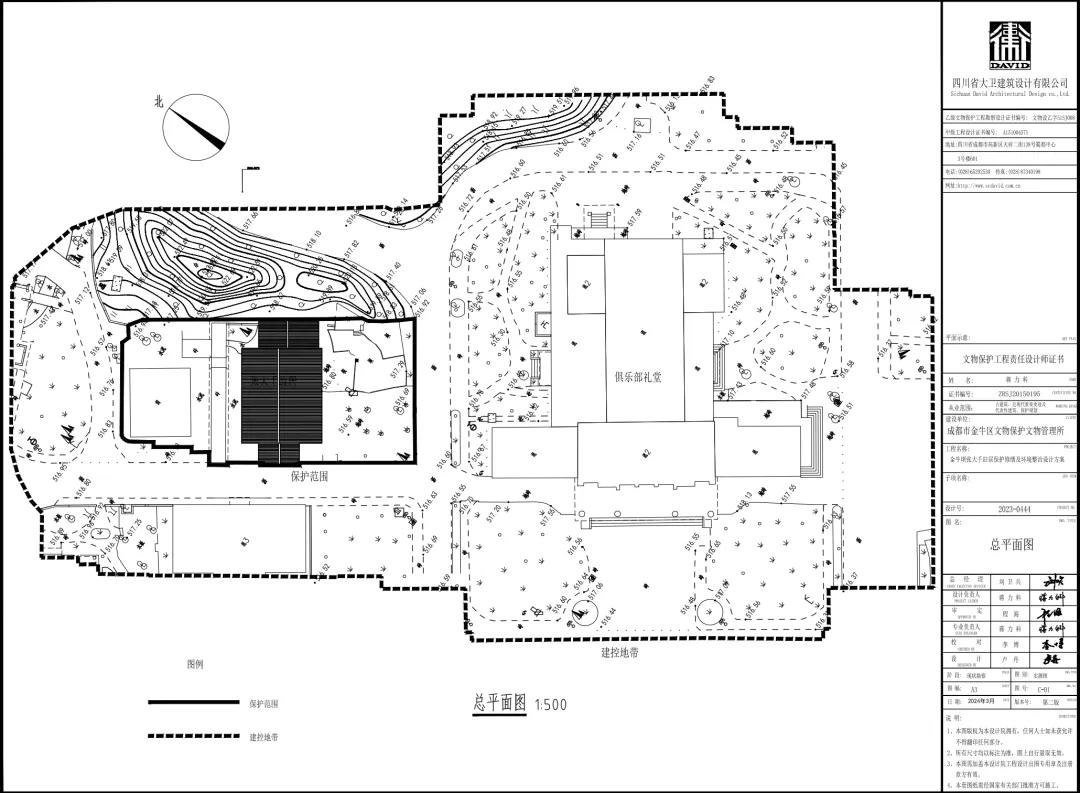
▲Master Plan of the Site
Having been unused for a long time and fallen into disrepair, the building suffered from large-scale roof collapses and severe decay of wooden components, demanding comprehensive restoration.
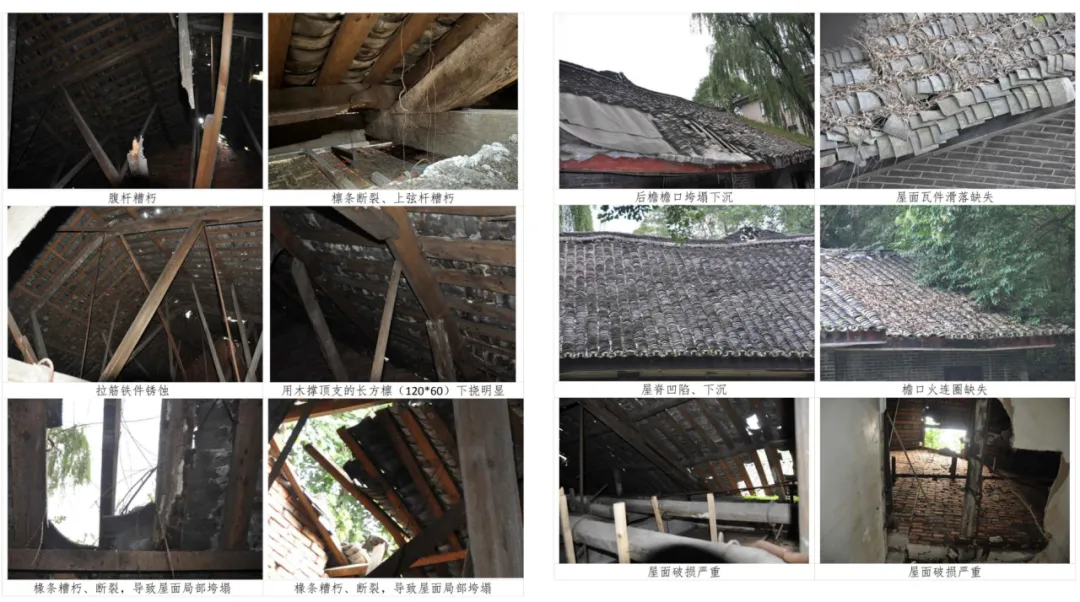
▲Survey conditions of Zhang Daqian's Former Residence before Restoration
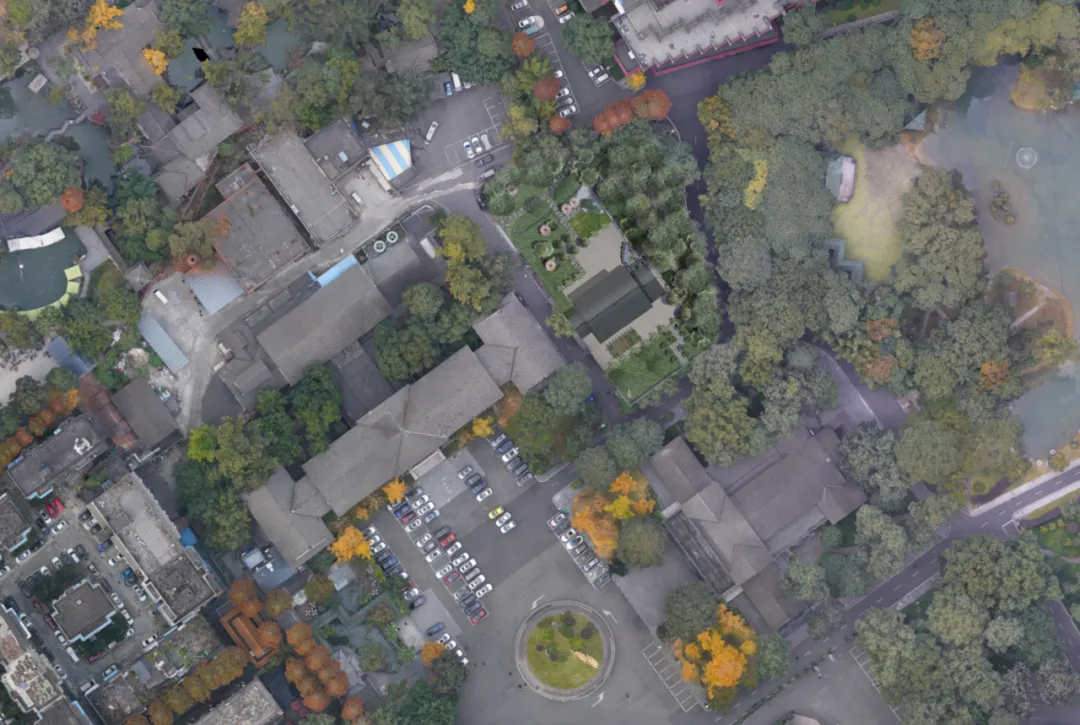 ▲
▲Aerial View of the Site
In October 2023, after a rigorous selection process, our company was honored to undertake the important task of Design for the Protection, Restoration and Environmental Improvement of Zhang Daqian's Former Residence at Jinniu Dam, Chengdu, safeguarding this irreplicable urban cultural context with professional dedication.
Tracing the Origin with Meticulous Detail
Through rigorous historical research, precise surveying and mapping, combined with scientific material analysis, we accurately interpret the original appearance and historical information of the building, providing a scientific basis for the principle of "minimum intervention".
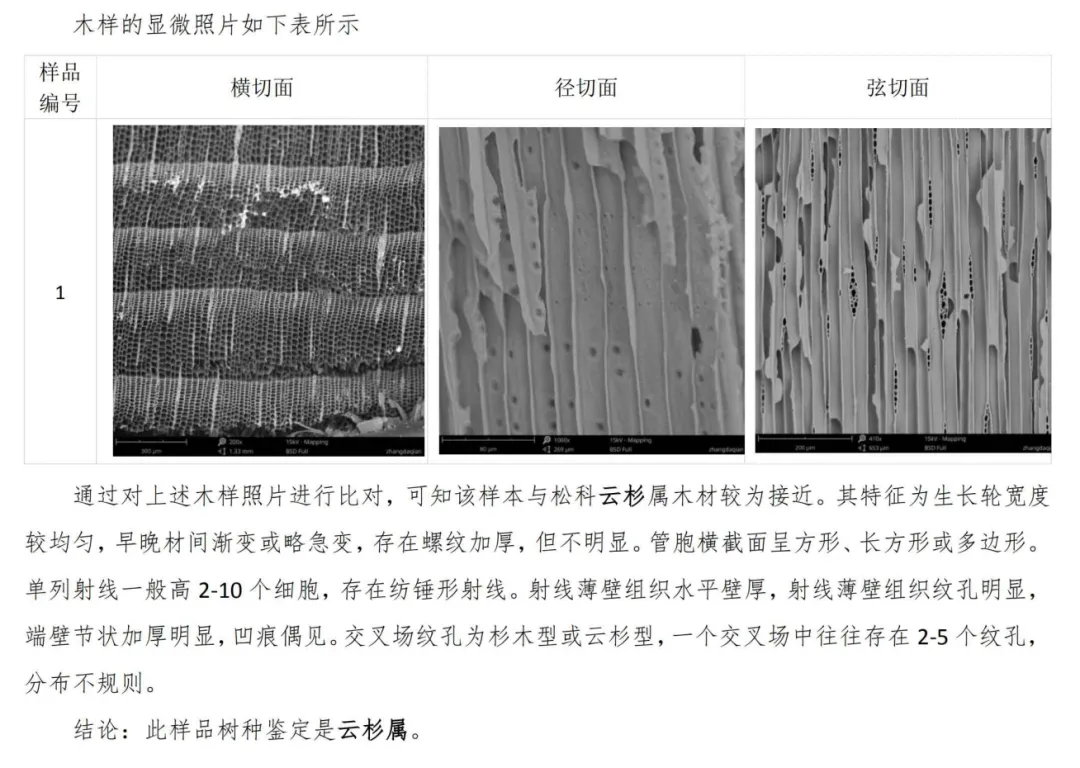
▲Wood Sample Testing and Analysis
Ingenious Craftsmanship, Restoring the Old as It Was
Inheriting the essence of traditional construction techniques for western Sichuan residential buildings, we conduct delicate restoration and reinforcement on the wooden frames, blue brick walls, gray plaster decorations and other elements, ensuring the maximum preservation of historical authenticity. Every repair is designed to coexist harmoniously with the original structure.
▲Empowered by Technology, Wisely Guarded
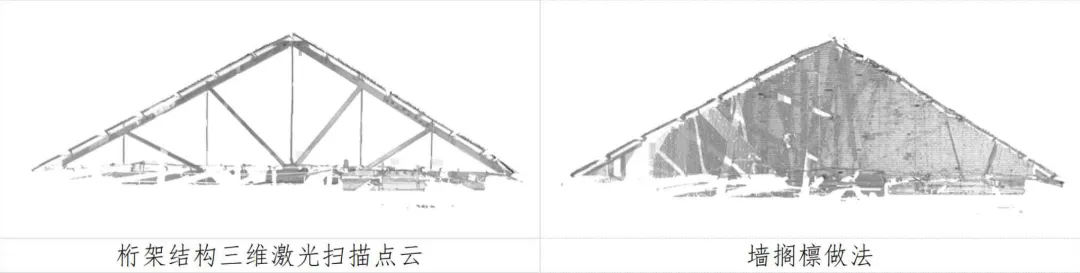
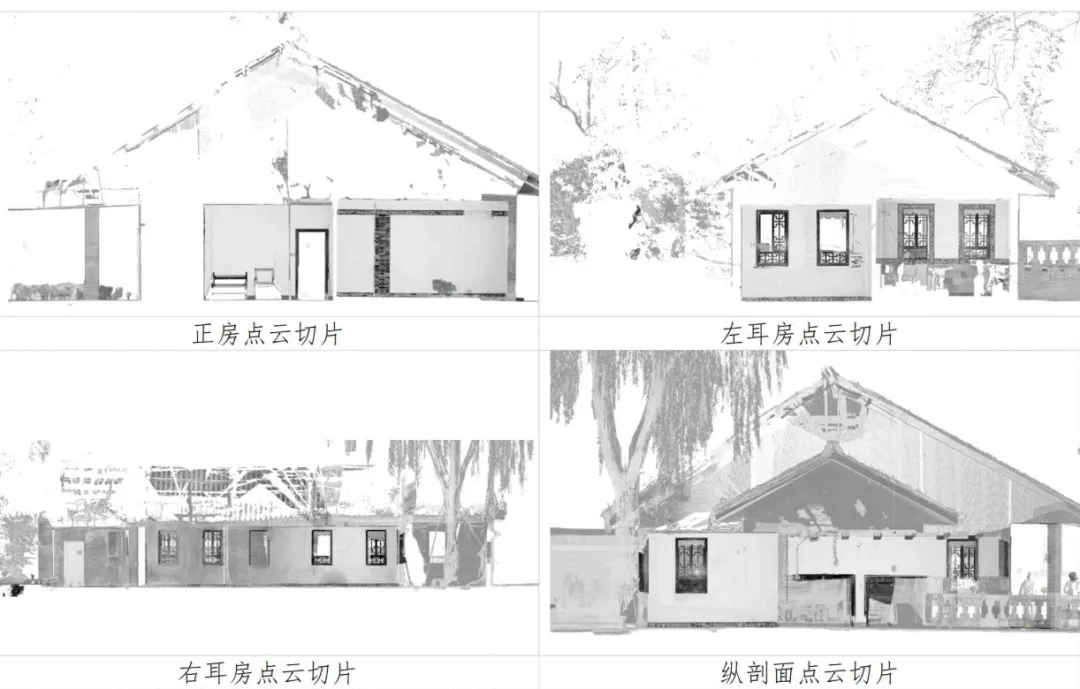
Using 3D laser scanners, drone aerial photography, micro-drill resistance meters, on-site wood sampling, manual measurement and other survey techniques, we comprehensively collect data on the basic form, specifications and current damage status of the building's structure.
Inheriting Cultural Context, Upholding Urban Temperament
The protection and restoration of Zhang Daqian's Former Residence is far more than the renovation of a single building.
It is a profound tribute to a great artistic master, allowing future generations to touch the warmth of his creation and life.
It is a reinforcement of the root of Chengdu's urban culture, ensuring that historical memories remain clear and tangible amid the process of modernization.
It is the meticulous creation of a public space for cultural nourishment. In the future, this place will become a cultural living room for citizens and tourists to perceive art and savor history.
Professional Guardianship, Endless Inheritance
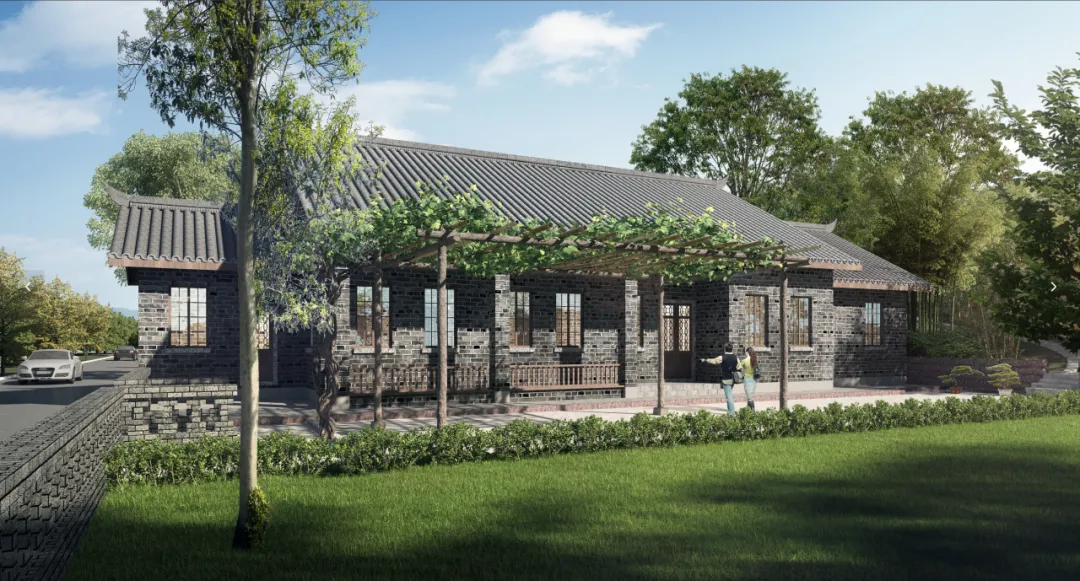
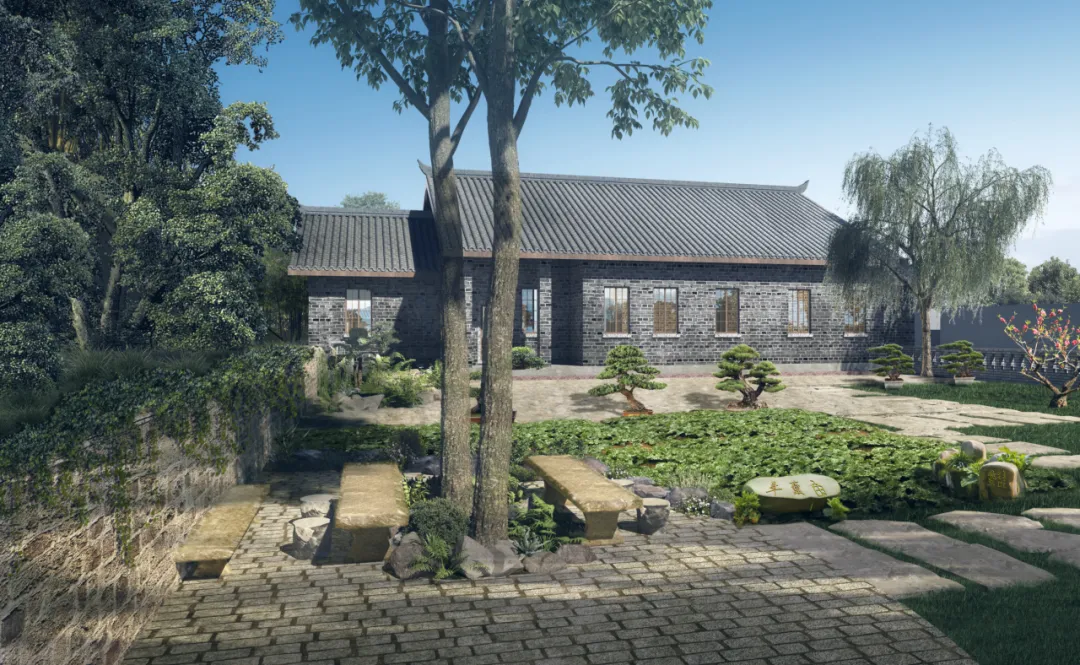
Under the professional and dedicated guardianship, Zhang Daqian's Former Residence at Jinniu Dam has been dusted off and restored to its former glory. It will continue to silently tell the legend of the master to every visitor, conveying the profound and enduring cultural heritage of this city.
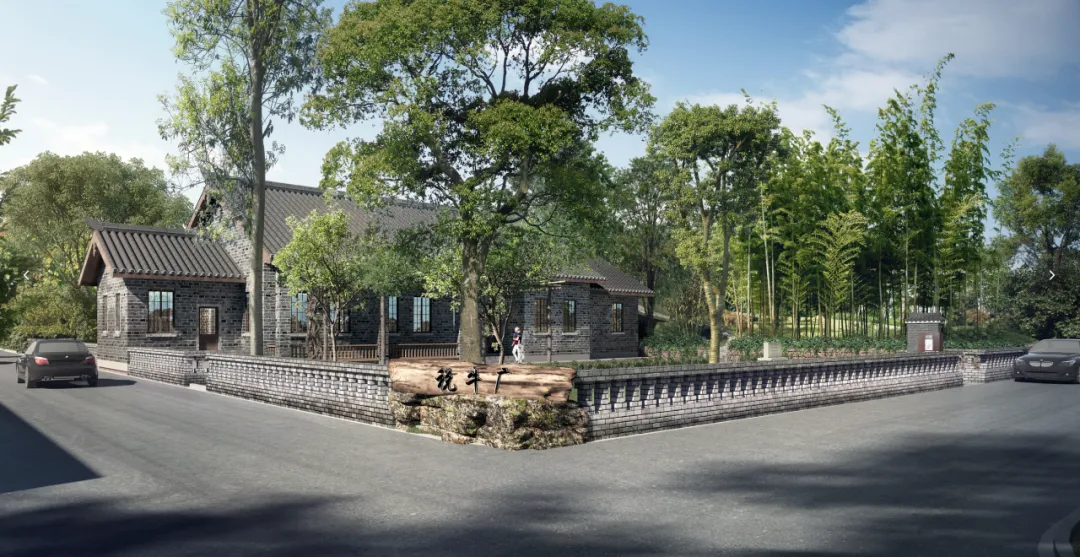 ▲
▲Rendering of the Restoration Design for Zhang Daqian's Former Residence
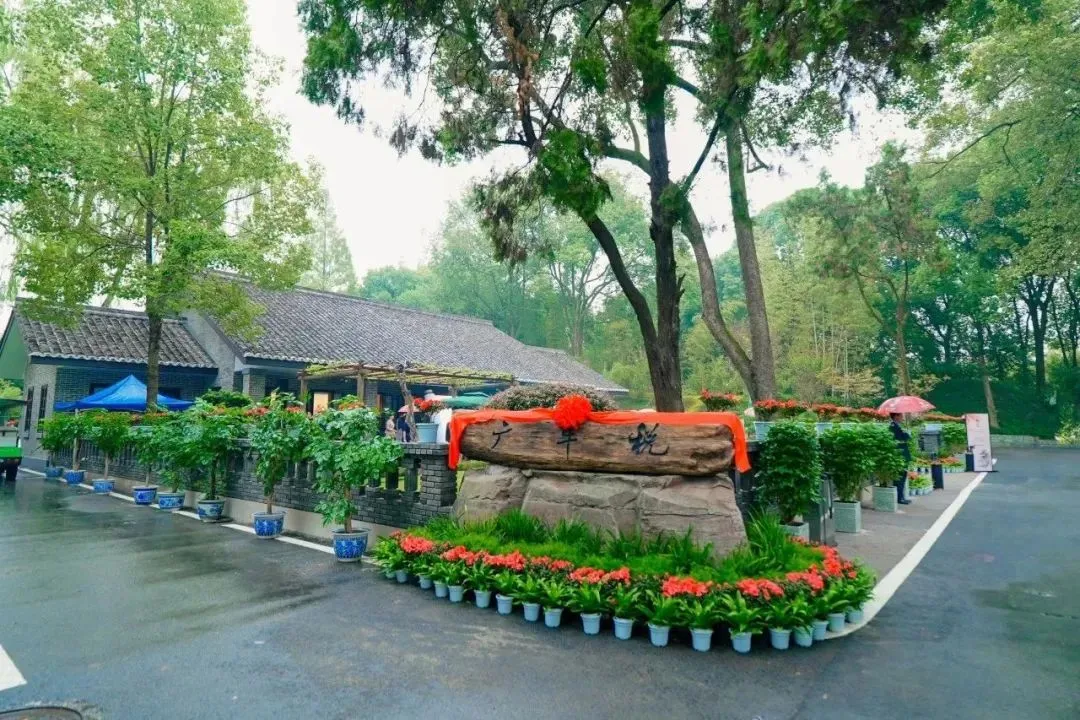
▲Actual Photo of Zhang Daqian's Former Residence after Restoration
Our company has been deeply engaged in the field of cultural heritage protection for many years, always adhering to the core principles of "protection first, scientific restoration, and rational utilization". The design for the protection, restoration and environmental improvement of Zhang Daqian's Former Residence at Jinniu Dam is yet another concentrated demonstration of our professional strength, rigorous attitude and humanistic sentiment. We measure history with millimeter-level precision, and converse with the master with reverence, solely to enable this residence, which carries an artistic soul, to shine with enduring charm in the new era.
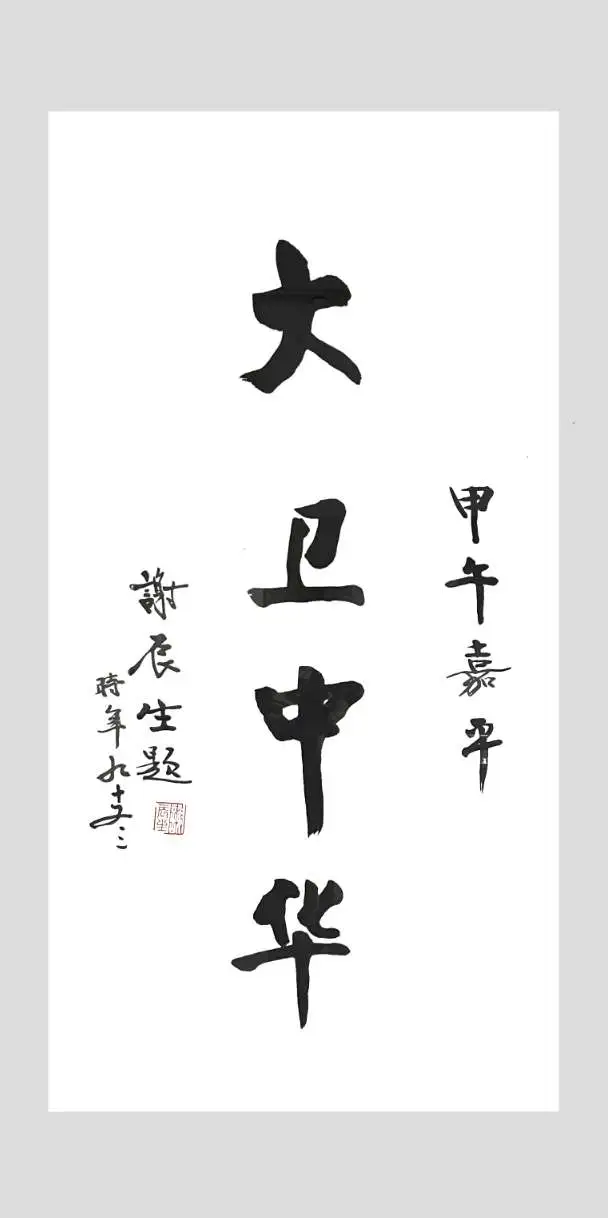 ▲
▲Inscription by Mr. Xie Chensheng, a towering figure in China's cultural relics circle and the drafter of the
Cultural Relics Protection Law of the People's Republic of China, for Sichuan David Design.