China's white liquor brewing boasts a long history, and liquor has gradually become an indispensable beverage in people's daily lives and banquets. As "the First City on the Ten-Thousand-Mile Yangtze River", Yibin has been a renowned producer of fine liquor since ancient times and is one of China's Four Great Liquor Capitals.
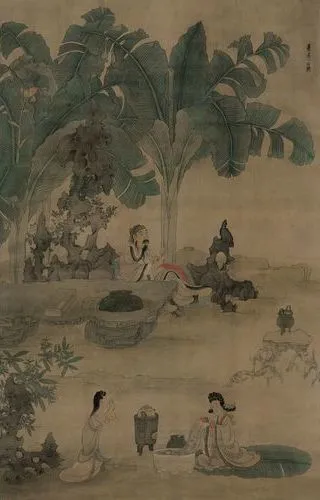 ▲ Wine Drinking in the Banana Grove by Chen Hongshou, Ming DynastyHonglou Meng Liquor from Yibin, Sichuan, is produced on the bank of the Minjiang River, at the foot of the Dan Mountain. The area features lush green mountains, gurgling streams, humid air, thick soil with moderate viscosity and favorable moisture retention. It is also blessed with high-quality underground springs known as "Red Cliffs and Clear Waters" — the water is crystal clear, sweet and unpolluted, rich in various trace elements, and ideal for the growth of diverse microorganisms, creating uniquely favorable conditions for liquor brewing.
The distillery is home to more than 1,200 well-preserved old fermentation pits. Honglou Meng Liquor, an elegant strong-aroma white liquor, is deeply loved by consumers for its superior quality. It has been honored as a Famous Chinese Cultural Liquor, a Famous Sichuan Liquor, and a Famous Trademark of Sichuan Province. It has also won numerous accolades, including the Gold Award at the First China Food Expo, the Gold Award at the 1992 Hong Kong International Expo, and the Gold Award at the 5th Asia-Pacific International Expo. Furthermore, Honglou Meng Liquor was designated as the "Official Specified Liquor" by the United Nations in 2009.
The Zaofangtou Liquor-Making Workshop Site is located in Honglou Meng Village, Xijie Town, Xuzhou District, Yibin City, Sichuan Province, within the current factory area of Honglou Meng Liquor Industry Group Co., Ltd. It is a white liquor workshop site dating back to the Ming and Qing dynasties.
Following archaeological surveys and excavations, the total area of the site is approximately 3,000 square meters, with an excavation area of over 450 square meters. The site's stratigraphy is divided into four layers, and several relics have been discovered, including house foundations, drainage ditches, water ponds, drying floors, and ash pits, fully reflecting the original layout of the liquor-making workshop. As the earliest and best-preserved white liquor brewing workshop site discovered in Sichuan to date, it provides historical evidence for the region's status as China's largest and highest-quality white liquor production base, and offers precious physical materials for the study of liquor-making handicraft workshops in Sichuan during the Ming and Qing dynasties.
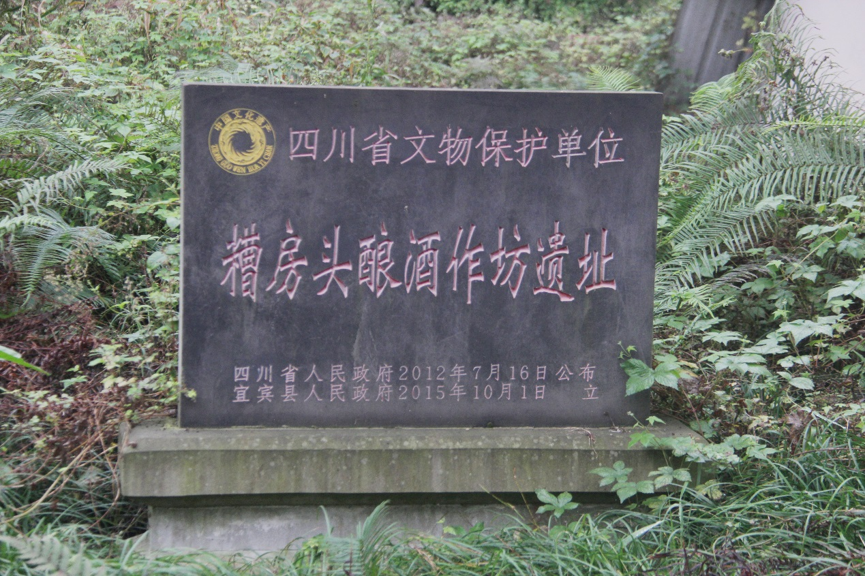
Following two expert evaluations, one at the provincial level in Sichuan and one at the national level, the Zaofangtou Honglou Meng Workshop was confirmed as a Ming Dynasty liquor-making workshop site.
In August 2011, with the approval of the Ministry of Science and Technology, the State Administration of Cultural Heritage, and the Ministry of Finance, the Zaofangtou Liquor-Making Site was included in the national "Compass Plan — Value Exploration and Exhibition of Ancient Chinese Inventions and Creations (Value Exploration and Exhibition of the Zaofangtou Liquor-Making Site)". Upon completion, the site will become a demonstration base for traditional Chinese liquor-making techniques. Honglou Meng Liquor Industry plans to construct a protective museum on the site.
On February 25, 2012, the Zaofangtou Liquor-Making Site was shortlisted for the "2012 Top Ten Archaeological Discoveries" by the State Administration of Cultural Heritage.
In July 2012, the People's Government of Sichuan Province designated the Zaofangtou Ming Dynasty Liquor-Making Site as a Provincial-Level Cultural Relic Protection Unit of Sichuan.
On November 17, 2012, the Honglou Meng Zaofangtou Old Workshop was added to the updated China World Cultural Heritage Tentative List by the State Administration of Cultural Heritage.
The application for including the traditional brewing technique of Yongle Ancient Cellar Liquor in the National Intangible Cultural Heritage List is currently underway level by level.
The Zaofangtou Liquor-Making Site has aroused great interest among academic circles at home and abroad. More than 300 experts and professors from dozens of research institutions and universities, including the Chinese Academy of Social Sciences, the Chinese Academy of Sciences, the Chinese National Academy of Arts, the Palace Museum, the National Museum of China, Peking University, Renmin University of China, Academia Sinica (Taiwan), Soochow University (Taiwan), The Chinese University of Hong Kong, Sichuan Academy of Social Sciences, Sichuan University, Wuhan University of Science and Technology, and Central China Normal University, have made special trips to Zaofangtou for investigations.
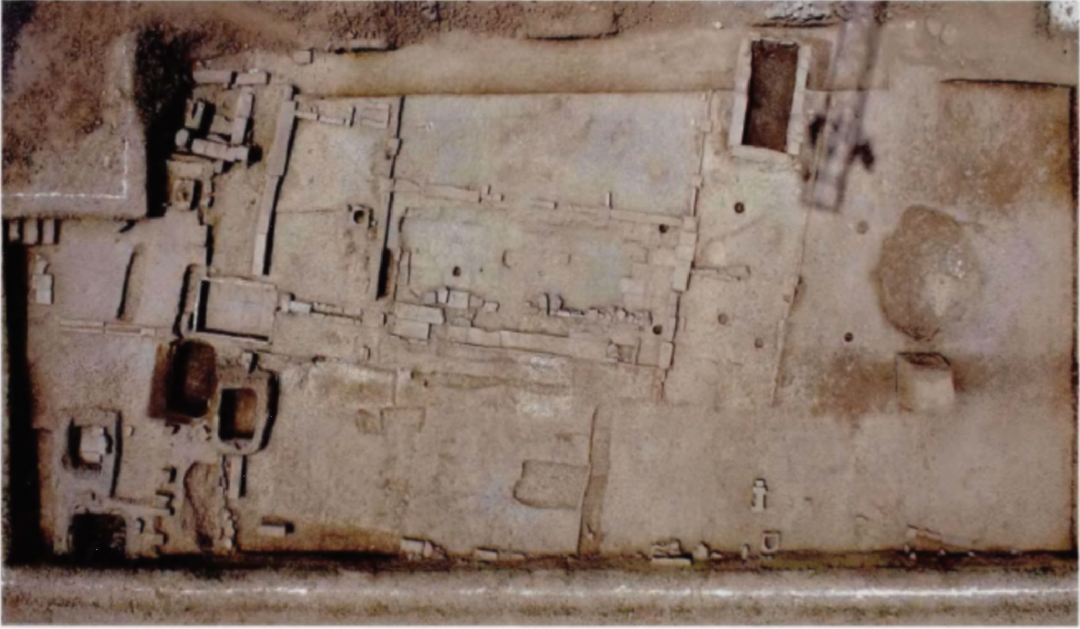
▲ Panoramic View of the Excavation Area
Southern Sichuan has witnessed the evolution of liquor-making techniques, from cellar-stored liquor and fermented grain liquor in the Qin and Han dynasties, to fruit wine in the Tang and Song dynasties, and distilled liquor in the Ming and Qing dynasties.
The Ming Dynasty was a pivotal period for the prototype, standardization and development of China's distilled liquor technology. Against the backdrop of the comprehensive development and prosperity of the national liquor-making industry, the white liquor brewing industry in the Zaofangtou Site area continued to grow and thrive during this period, and the Zaofangtou Liquor-Making Workshop Site emerged at this time. It is the liquor-making site with the earliest usable date, the most complete elements, and the richest variety of production tools excavated in Sichuan. Analysis of the relics unearthed, such as the size of the drying floor, the number of fermentation pits, the scale of the water ponds, and the stone weighbridge marked "360 jin per unit", indicates a large brewing scale at Zaofangtou. An analysis of the distribution and functions of the fermentation pits, drying floors, soaking ponds and ash pits reveals that the liquor-making technology at the Zaofangtou Workshop was already highly sophisticated.
In the late Ming and early Qing dynasties, frequent wars reduced Gongguanba, where the Zaofangtou site is located, to a desolate ruin. Archaeological excavations show that the site was abandoned at the end of the Ming Dynasty.
In the 9th year of the Shunzhi reign of the Qing Dynasty (1652), Xu Wanzhong, a 23-year-old native of Macheng, Hubei, migrated to Gongguanba, Xijie, Xuzhou District to reclaim and farm the land. He gradually restored liquor-making based on the original workshop in Gongguanba, and the Zaofangtou Liquor-Making Workshop prospered once again.
In 1979, Yibin Xiashitang Distillery was established at the Zaofang Site in Xiashitang Village, Xijie Town (now Honglou Meng Village).
Honglou Meng Liquor from the Zaofangtou Site area became a typical example of the rise of Sichuan's white liquor industry in the early days of reform and opening up, and still enjoys wide national fame and influence to this day.


The site is close to the river, and a significant rise in water levels could lead to its submersion. Additionally, the temporary greenhouse built by Honglou Meng Liquor Industry Group Co., Ltd. over the site in 2011 is at risk of collapse, making it urgent to construct a sturdy protective building to safeguard the site.
After a careful on-site survey, David Design developed a scientific, rational and appropriate maintenance and renovation design plan, which was ultimately selected as the winning implementation plan.
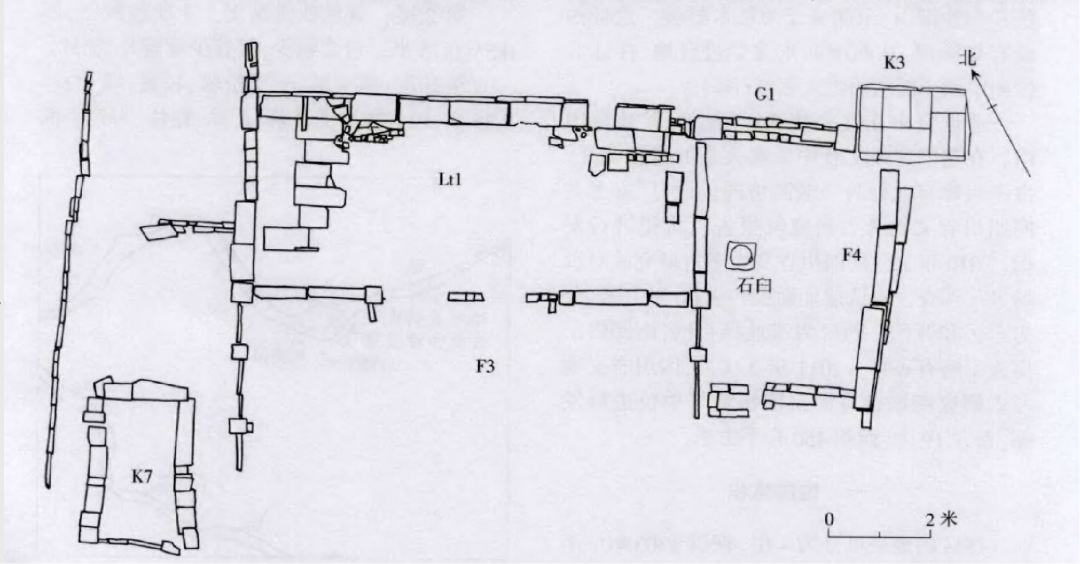
▲ Floor Plan of the Zaofangtou Liquor-Making Workshop SiteDesign and Construction Principles of the Zaofangtou Liquor-Making Workshop Site Museum
1. Protection Principle
The site museum shall be designed and constructed for protection only after sufficient demonstration, exploration and excavation. A sturdy new protective building shall be built to safeguard the cultural relics themselves. The new building shall be integrated in style with the surrounding environment. In accordance with historical flood level data, the flood control capacity shall be upgraded to withstand a once-in-a-century flood. Archaeological geological surveys shall be conducted prior to construction, and further archaeological excavations may be carried out if necessary.
2. Development Principle
Attention shall be paid to the harmony between material and spirit, integrating the physical site with visual effects, environmental atmosphere and spiritual experience. Modern architecture shall be integrated with the ancient site.
3. Effectiveness Principle
Exploration shall be made in effective utilization, with rational design and construction methods adopted to minimize environmental impacts and make full use of the site.
4. Sharing Principle
New and old elements shall be reorganized and integrated to inject vitality into the site and provide possibilities for its development.
5. Reversibility Principle
Assemblable and renewable materials shall be used for construction to facilitate reversibility. Reversibility constitutes genuine protection of the site and facilitates in-depth excavations in the later stage.
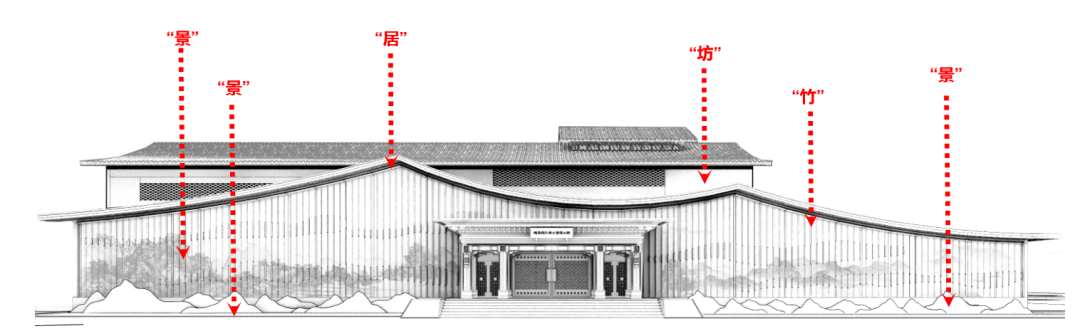
Architectural Features
- "Residence": The characteristic skyline of Yibin traditional dwellings is abstracted to form an elegant architectural contour.
- "Workshop": Typical architectural elements of folk liquor workshops, such as "blue bricks, grey tiles, lattice windows and roof clerestory windows", are adopted to embody the concept of an ancient cellar.
- "Bamboo": The mullions of the glass curtain wall are designed with the concept of "bamboo", expressing the imagery of a bamboo house.
"Scene":
- The Long Scroll of Minjiang River Landscape: A huge landscape painting is printed on printed glass to present the prosperous scene of "red cliffs, clear waters and liquor wharves". Acoustic, optical and electrical technologies are applied to animate the entire scene.
- "Red Cliffs": A realistic mountain landscape is created with rockeries in front of the building.
- "Clear Waters": An abstract water landscape is formed with a shallow pool in front of the rockeries.
The winning scheme by David Design fully absorbs the theoretical achievements of the Minjiang regional human and ecological survey and the Zaofangtou archaeological research, transforming archaeological findings into productive forces and revitalizing traditions. It aims to build an international incubation base for Chinese intangible cultural heritage and an industrial tourism attraction integrating site protection, cultural relic exhibition, liquor culture sightseeing, intangible cultural heritage education, product production and display, tasting and negotiation, and tourism.
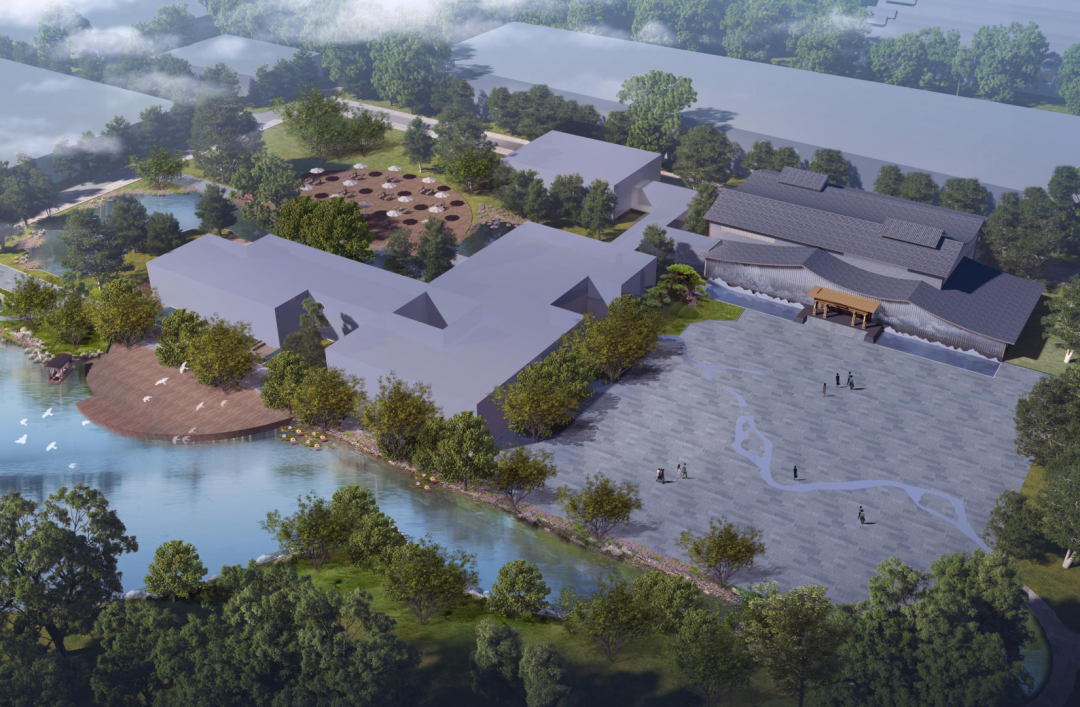 ▲ Aerial View of the Site Museum
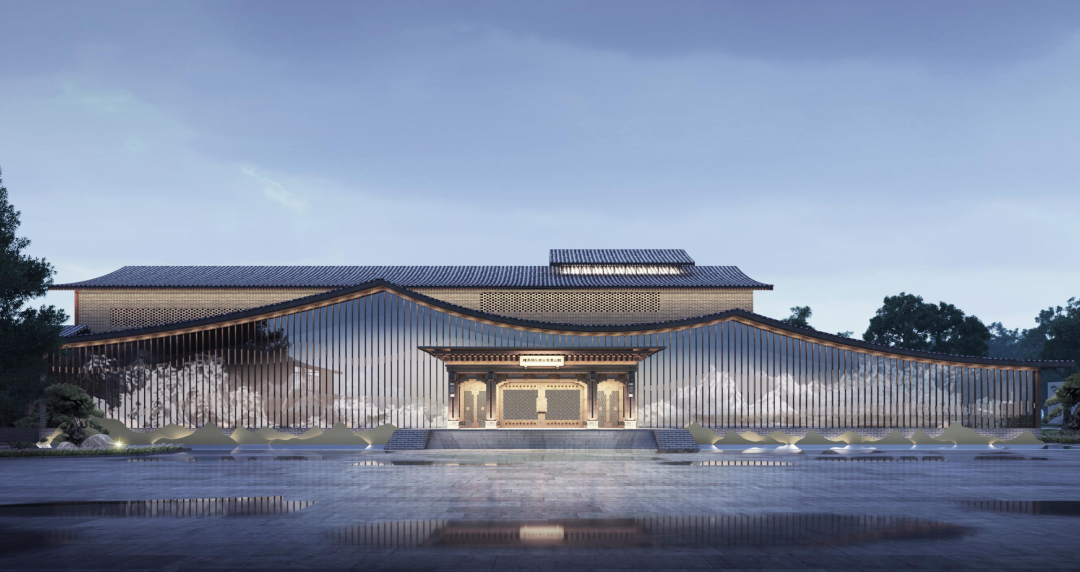 ▲ Elevation Rendering of the Site Museum
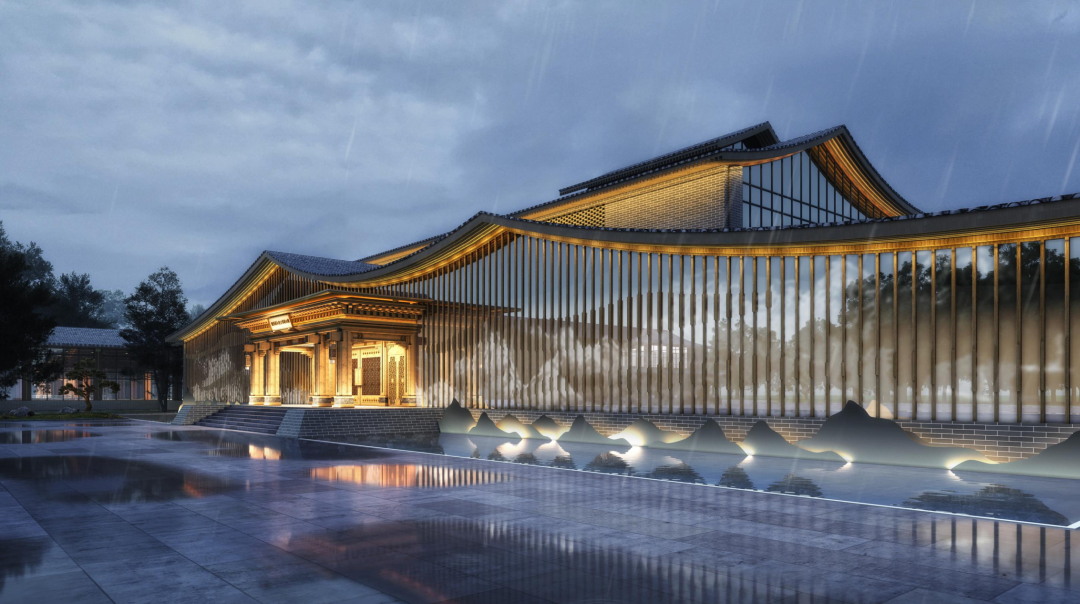 ▲ Perspective Rendering of the Site MuseumThe ancient brewing techniques and elegant cellar aroma of Zaofangtou infuse the liquor with the classic cultural charm of Dream of the Red Chamber. Coupled with the site's unique cultural, natural and geographical environment, and the continuity of its liquor-making techniques, it possesses precious historical, scientific, cultural, folk-custom, economic and social values.